Buildings & industry
HVAC, pumps, fans, refrigeration and flexible processes require defined comfort, process and stop-adjustment limits.
Loading page…

Explore design connections between compute nodes, storage and energy scheduling. AI-generated scene concept, not a photograph or a delivered customer case.
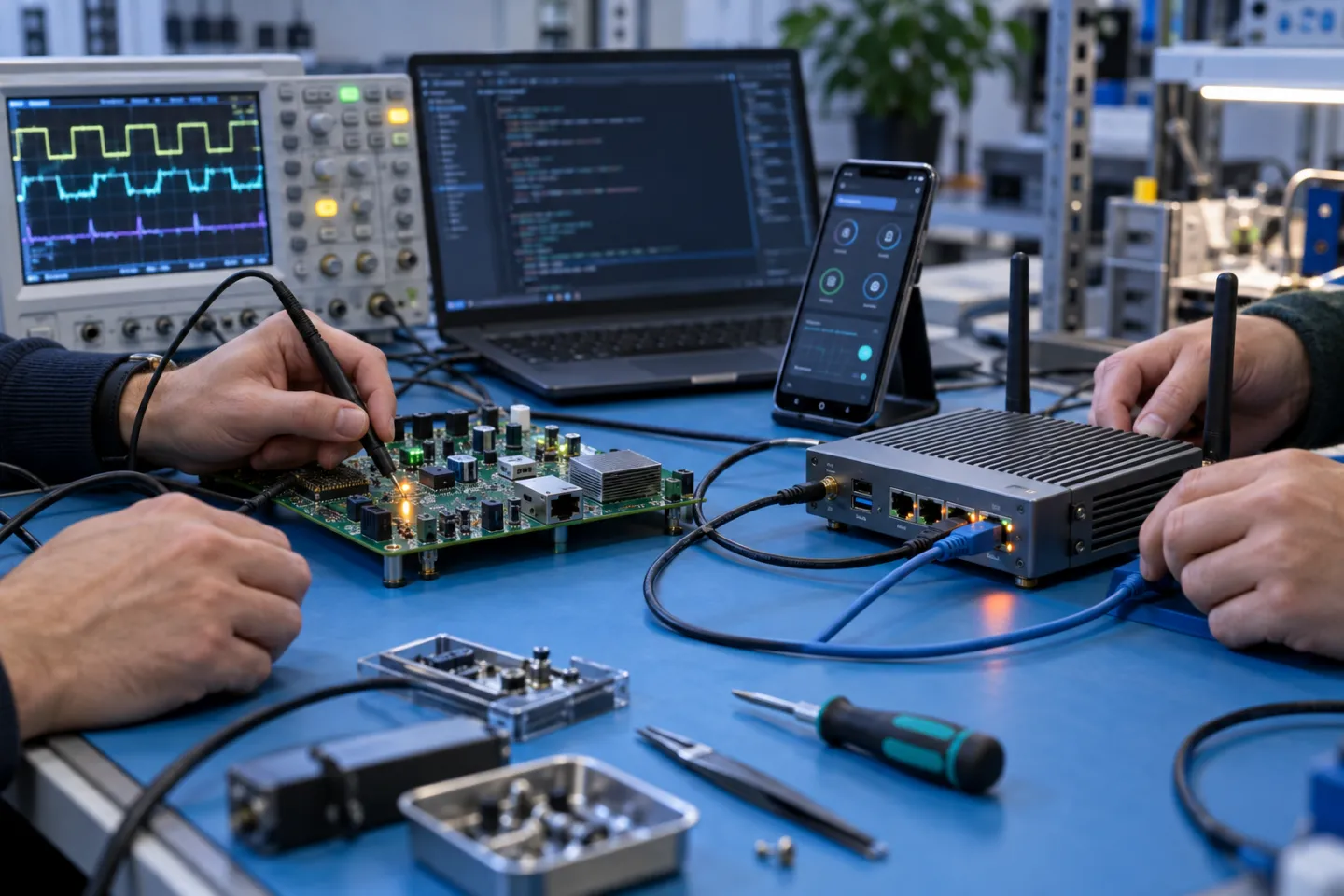
A development concept for routers, embedded devices and firmware debugging. AI-generated scene concept, not a photograph or a delivered customer case.
Connect resource assessment, integration, commissioning and daily operation in a clear delivery process. Schedule, cost and eligibility depend on site conditions and local procedures.
 AI concept · Not a project photograph or product specification
Concept
Verify adjustment depth, response time, duration and recovery for each resource.
HVAC, pumps, fans, refrigeration and flexible processes require defined comfort, process and stop-adjustment limits.
Consider reserve energy, equipment life, travel needs and site capacity. Validate whether bidirectional adjustment is feasible.
Forecast renewable output and identify movable or deferrable tasks. Real-time services must not be assumed interruptible.
UPS and backup generation primarily support continuity. Other uses require specific assessment and are not assumed market capacity.
Define inputs, deliverables and progression criteria at each stage instead of promising a universal schedule.
Analyze load curves, assets and business requirements. Produce a flexibility inventory and assumption-based estimates.
Define points, communications, control authority, isolation and excluded resources.
Install required terminals and gateways. Verify data, clocks, commands and acknowledgments.
Measure flexibility and fault recovery. Complete required registration, integration or acceptance procedures locally.
Forecast, declare, respond, manage deviations and reconcile accounts, with agreed operating reports.
Reuse validated templates while independently assessing new-site equipment, permissions and resource differences.
Estimates are not guaranteed returns. Avoid counting or committing the same response twice.
Evaluate eligible response, ancillary services, energy optimization and renewable value. Deduct integration, operation, losses and performance charges.
Discuss service fees, managed operations or revenue sharing. Document investment, expenses, sharing, settlement periods and exit conditions.
Rules, dispatch frequency and resource states can change. Declare measured capability and continuously monitor performance and business impact.
Make uncertainties explicit before implementation.
A blanket zero-impact promise is inappropriate. Use trials, exclusions, stop conditions and recovery tests to keep impacts within agreed limits.
Review protocols, authority and capabilities first, then determine whether interfaces alone suffice or equipment and control changes are needed.
Record availability, data completeness, response deviations and incident closure. Separate viewing, operating, approval and audit permissions.
Prepare equipment records, recent load curves, site locations and uninterrupted-service requirements for an initial review.