Custom Android system development
Go beyond an app: make the device work around your operation. Using AOSP and available vendor platforms, customize system services, dedicated launchers, hardware interfaces, security policies and updates for ordering, industrial handheld and robot interaction terminals.
What we can customize
Connect the OS, peripherals, business apps and backend so dedicated devices are easier to operate, manage and update.
- AOSP and hardware integration
- Use the chipset and vendor BSP to integrate boot, display, touch, audio and networking; maintain an OS and hardware compatibility matrix.
- Framework and dedicated launcher
- Customize the launcher, startup flow, settings and required framework services, simplifying operation while preserving maintenance and recovery access.
- HAL and specialized peripherals
- Integrate scanning, printing, serial, card reading, cameras and sensors using licensed drivers and controlled app interfaces.
- Device policies and business integration
- Configure single-app or multi-app modes, permissions, offline queues and remote management; integrate ordering, warehouse, hotel or existing customer systems.
- System security and OTA
- Design SELinux policies, signing and update verification; assess Verified Boot and A/B support, then test power loss, failures and recovery.
- Compatibility, usability and release testing
- Test screen layouts, touch, languages, suspend/resume, power and prolonged operation; assess CTS and VTS testing and remediation for the target version and scope.
From the operating system to your operation
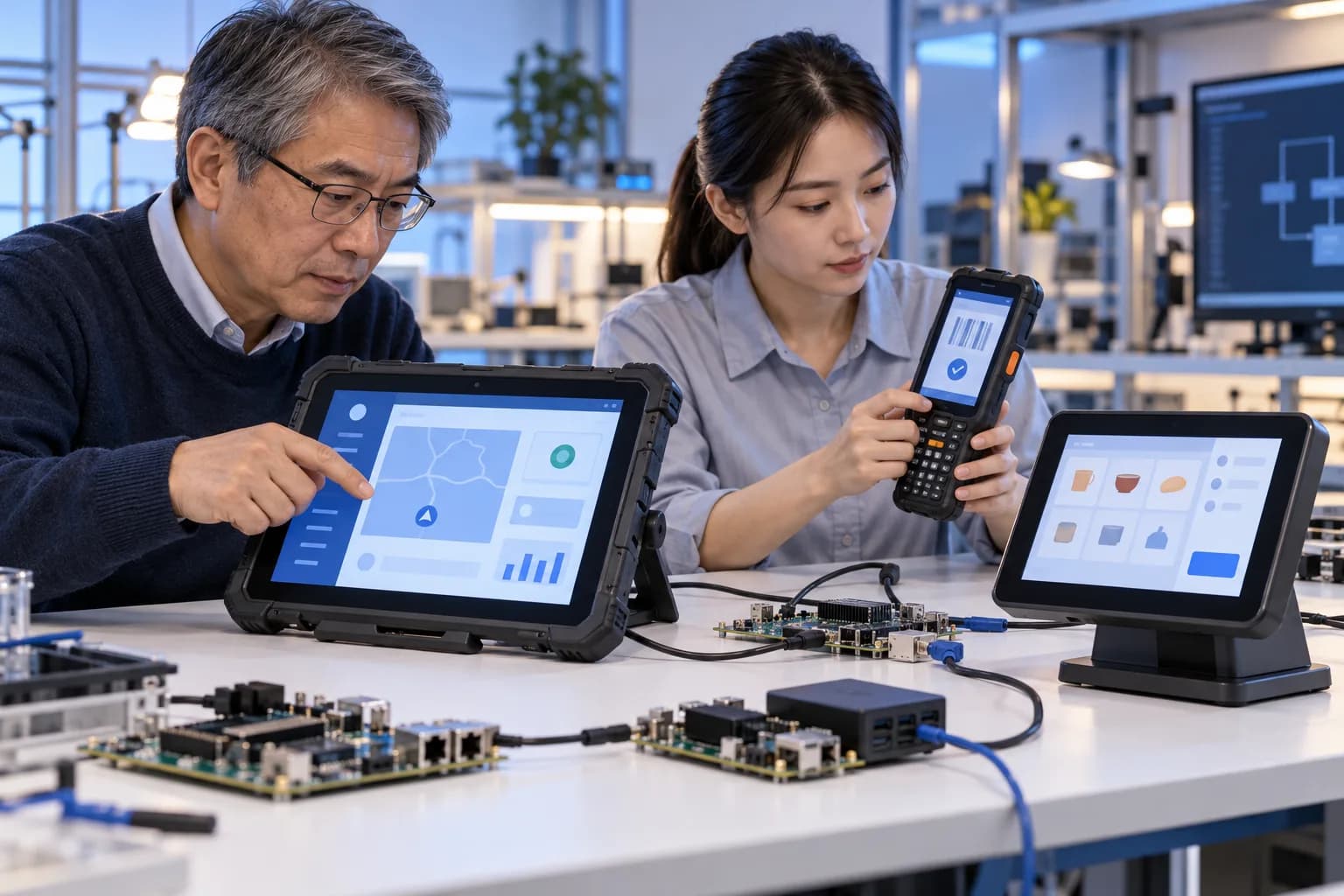
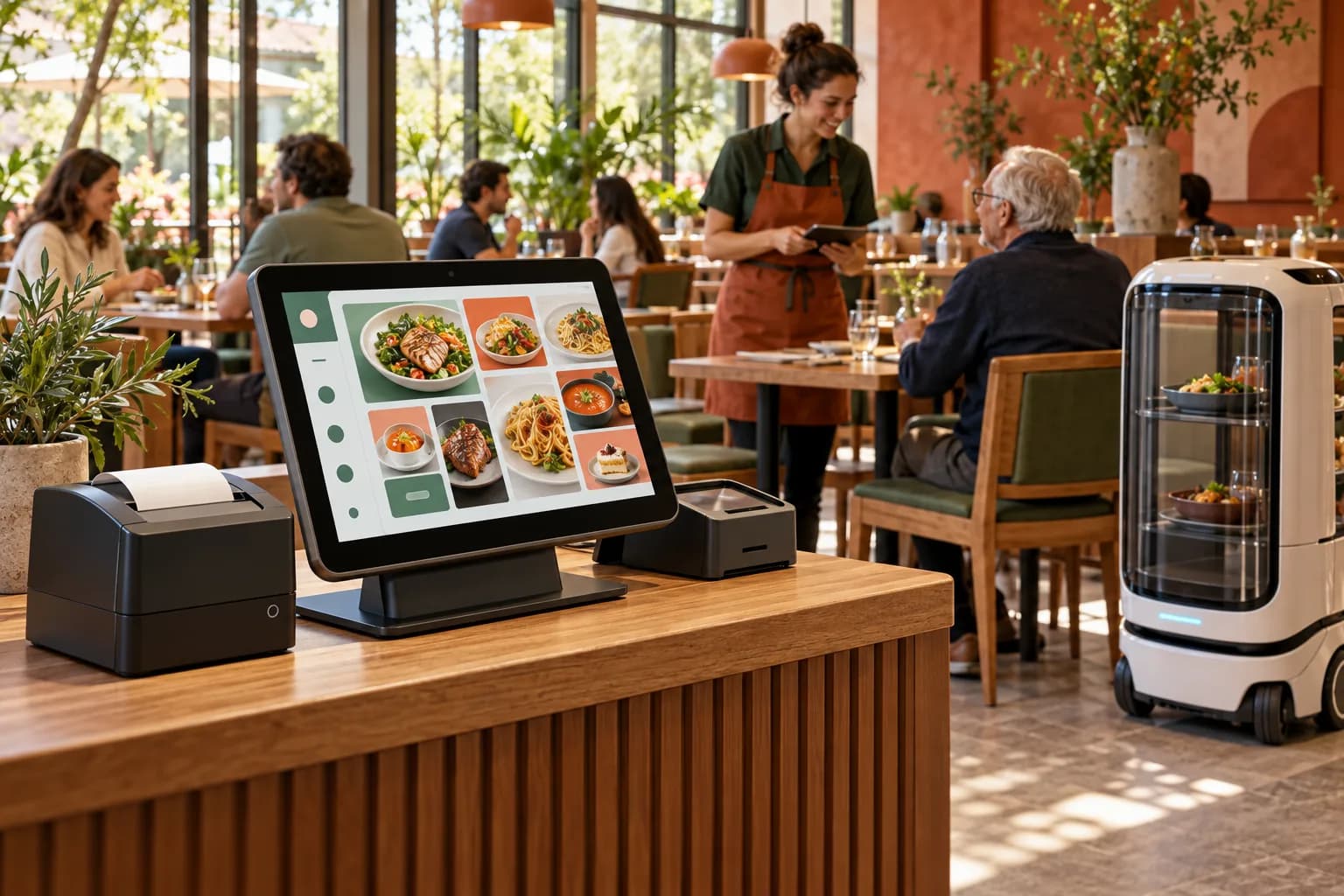
AI-generated concepts illustrating engineering roles and possible applications, not actual staff, customer photographs or delivered projects.
Dedicated tablets and handhelds
Design interfaces, peripherals and permissions together for inspection, device management and field operations; validate each screen and hardware variant.
Ordering terminals and delivery robots
Connect ordering, kitchen printing, order status and delivery tasks; separately confirm payment authorization, robot APIs and site circulation.

Warehouse scanning and hotel delivery
Use handheld devices for scanning, task confirmation and exception reporting, linked to warehouse or hotel systems and robots, with delivery records and human takeover.
Engineering strength you can evaluate
System engineering goes beyond a new interface. Architecture, platform integration, application integration and release testing work together, with review records, reproducible builds and test reports. Staffing and maintenance scope are agreed before kickoff.
- Architecture and platform selection
- Review compute, interfaces, power, boot chain and supply constraints; deliver architecture, interface and risk records.
- Platform software and drivers
- Diagnose BSP, kernel, device-tree and peripheral issues, with patches, configuration changes and debugging records.
- Application and device integration
- Connect device interfaces, applications and customer systems; define permissions, offline behavior, recovery and human takeover.
- Testing, security and release
- Test stability, updates and recovery against an agreed matrix; deliver issue records, release manifests and maintenance guidance rather than visual claims.
From prototype to production handoff
Requirements and hardware review
Confirm BSP access, licenses, interfaces and acceptance targets; identify external dependencies.
Prototype and platform bring-up
Validate boot, display, networking and key peripherals before extending functionality.
Integration and acceptance testing
Integrate systems and devices; test network loss, power failure, permissions, performance and update recovery.
Handoff and lifecycle maintenance
Deliver images, build and test documentation; agree on patches, upgrades, training and support in the contract.
More than an installation image
- System images, flashing and recovery instructions, and release manifests.
- Source patches, build scripts, configurations, interface and deployment documentation within the contracted scope.
- Peripheral, stability, performance, security and update-recovery test reports, with thresholds established on the target prototype.
- Open-source license and third-party component inventory; proprietary driver and commercial software rights are checked separately.
Technical references and scope
AOSP customization does not grant GMS or Google Play licensing. Google services, CTS, VTS, CDD, commercial certification and third-party rights need separate assessment. Integration requires lawful BSP, driver and signing access; arbitrary phone flashing, lock bypass and universal payment certification are not offered.
Discuss my system project
Share the chipset and board, available BSP or OS version, peripherals, use case, volume, target market and maintenance period. We assess documentation and licensing before agreeing on feasibility, milestones, budget and acceptance criteria.
Discuss my system project