Endpoint nodes
Run local agents, lightweight inference, caching and authorized data processing. Offline operation depends on available local models, data and power.
Loading page…

Explore the arrangement of racks, cooling pipes and maintenance aisles. AI-generated scene concept, not a photograph or a delivered customer case.

An office workflow concept for document retrieval, drafting and human approval. AI-generated scene concept, not a photograph or a delivered customer case.
Organize home and enterprise devices, community GPU hubs and regional resources into a layered network. Place workloads where they fit, within capacity, energy, connectivity and security constraints.
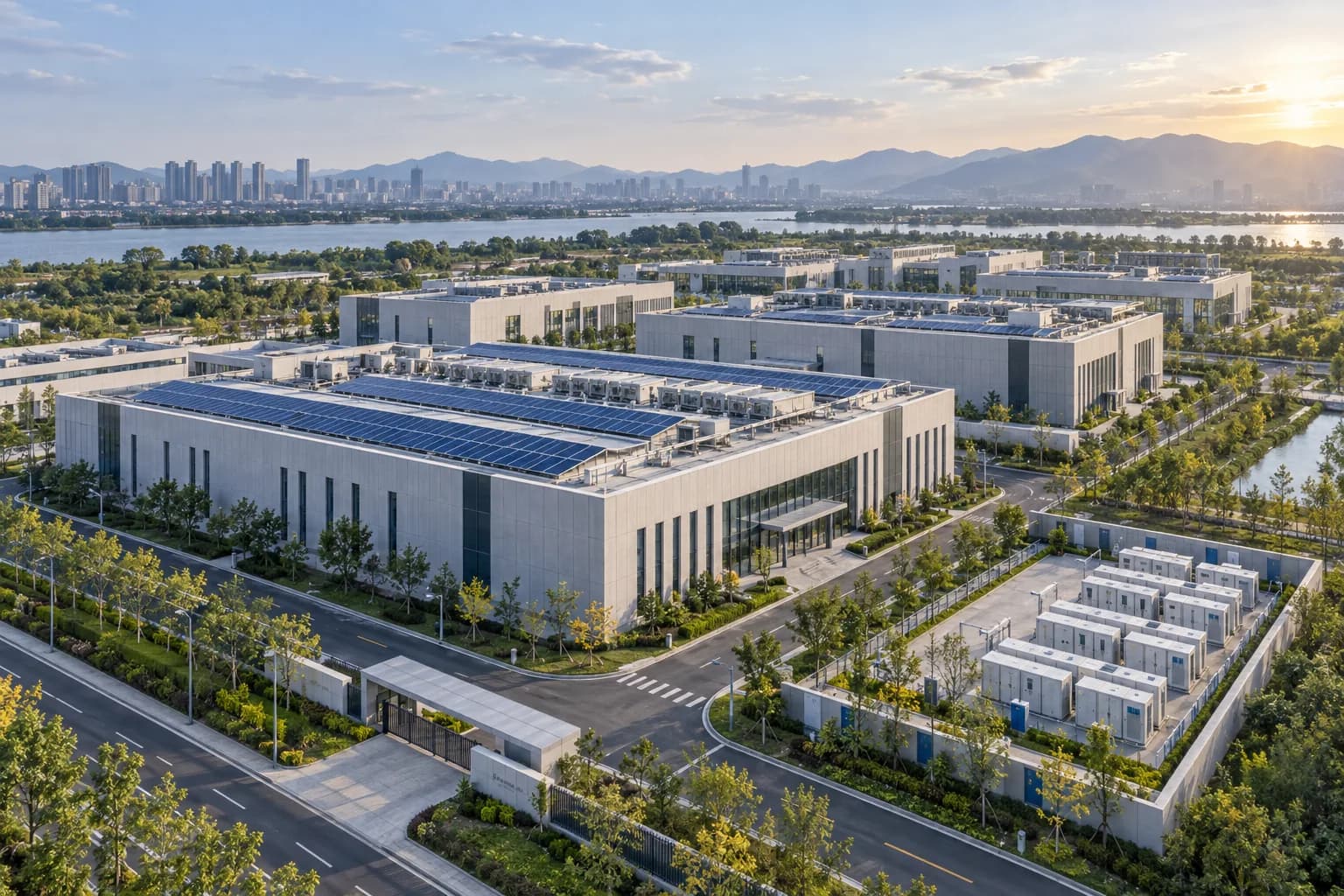 AI concept · Not a project photograph or product specification
Concept
These are deployment roles, not fixed product specifications. Node counts, capacity and supported workloads require project-level validation.
Run local agents, lightweight inference, caching and authorized data processing. Offline operation depends on available local models, data and power.
GPU micro-centers aggregate nearby workloads for shared inference, edge caching and resource coordination. Size them for concurrency, cooling and backup power.
Provide larger-scale training support, complex inference, distributed storage and cross-node operations, complementing edge clusters.
Distributed computing does not mean every task can be split or moved. Assess eligibility before comparing benefits and constraints.
Choose local, nearby or regional execution based on model compatibility, data location, priority and latency budgets.
Design encryption, backups, sharding and recovery as required. Define key management, access permissions and recovery procedures.
Evaluate tariffs, available power and migration overhead for flexible tasks. Prioritize continuity for workloads that cannot be interrupted.
Match compute devices, accelerators, networks, cooling and power. Validate compatibility and sustained loads, not only peak specifications.
Start with a testable pilot. Expand using evidence from operation.
Inventory workloads, data, sites and power conditions. Define topology, budget and acceptance metrics.
Select equipment, deploy software, configure connectivity and identity, and test models and interfaces.
Test load, fault isolation, backup recovery and energy use. Document measurements and their operating conditions.
Hand over documentation and operations. Add nodes according to capacity, cost and service-quality evidence.
Beyond performance: observability, recovery and maintainability.
Track utilization, queue times and growth trends to anticipate expansion needs.
Monitor temperature, storage, connectivity, drivers and power, with defined alerts and response ownership.
Manage versions, permissions, release validation and rollback paths to protect production workloads.
Retain access and operation records, exercise isolation and recovery, and review permissions regularly.
Explore DCP scheduling, energy matching and delivery, or submit your deployment scenario for review.