Custom Linux system development
Turn hardware into a maintainable product. From board bring-up and kernel drivers to system images, edge AI and remote updates, build a Linux platform for industrial equipment, energy gateways and dedicated compute nodes.
What we can customize
Reduce integration and maintenance uncertainty through stable operation, reproducible builds and maintainable updates.
- Board bring-up and BSP porting
- Adapt supported Arm or x86 targets; review bootloader, device tree, partitions and boot logs to establish a recoverable baseline.
- Kernel drivers and peripherals
- Integrate and diagnose serial, USB, Ethernet, CAN, I²C, SPI and sensor interfaces according to board support.
- Purpose-built images and build systems
- Choose Yocto, Buildroot or a tailored existing distribution; manage packages, dependencies, cross-toolchains, configuration and component inventories.
- Edge AI and device services
- Integrate inference runtimes, containers, acquisition services and customer APIs; define offline tasks, retention, supervision and resource isolation.
- Security baseline and update recovery
- Design least privilege, signature checks, read-only partitions, key handling and A/B or recovery partitions where supported; test interrupted updates.
- Performance and lifecycle support
- Measure boot, memory, CPU, temperature and sustained load; scope version maintenance, vulnerability review, diagnostics and release regression testing.
From the operating system to your operation
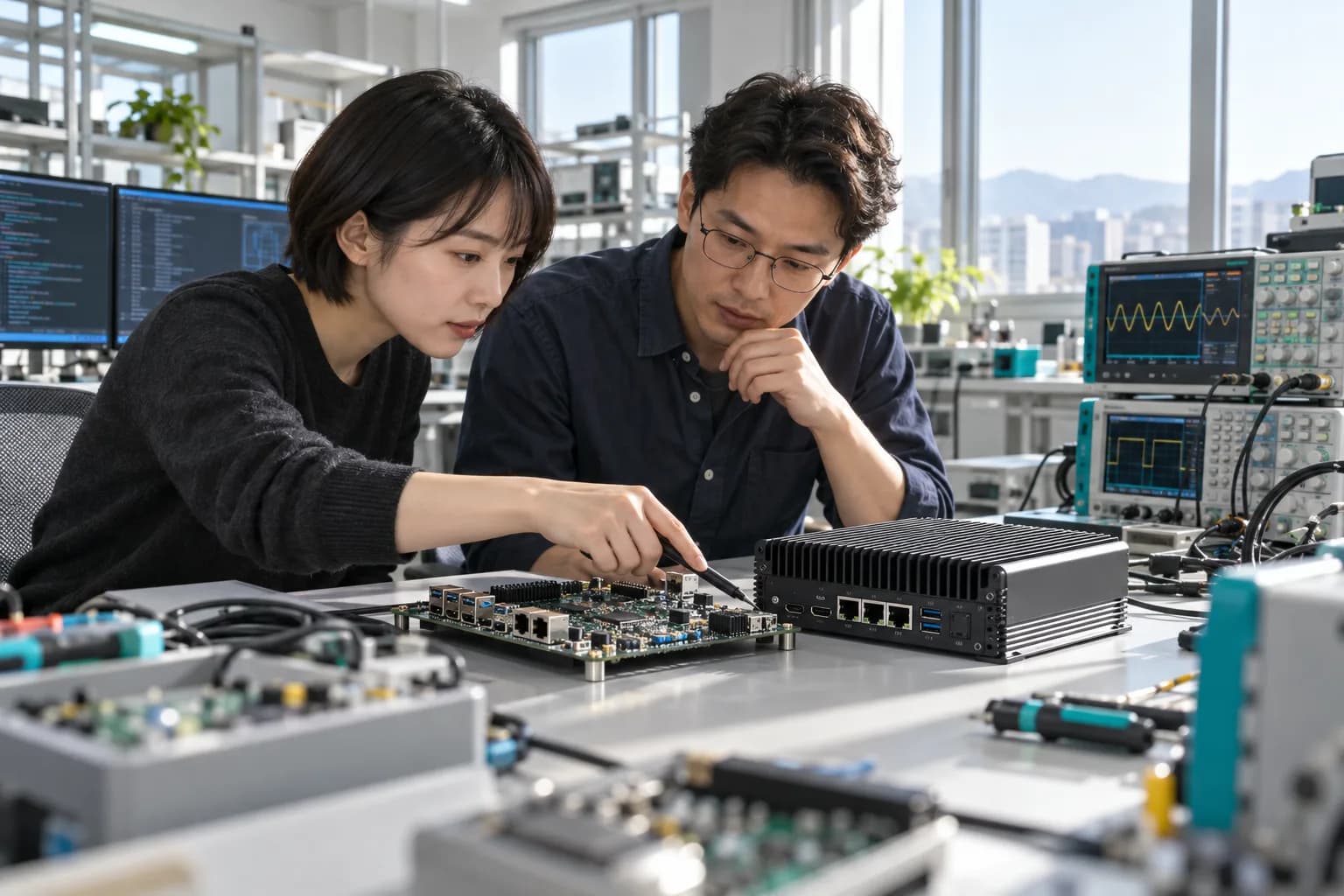
AI-generated concepts illustrating engineering roles and possible applications, not actual staff, customer photographs or delivered projects.
Embedded engineering and local AI
Create a consistent platform for dedicated boxes, industrial PCs and workstations, integrating model execution, peripherals and maintenance tools.
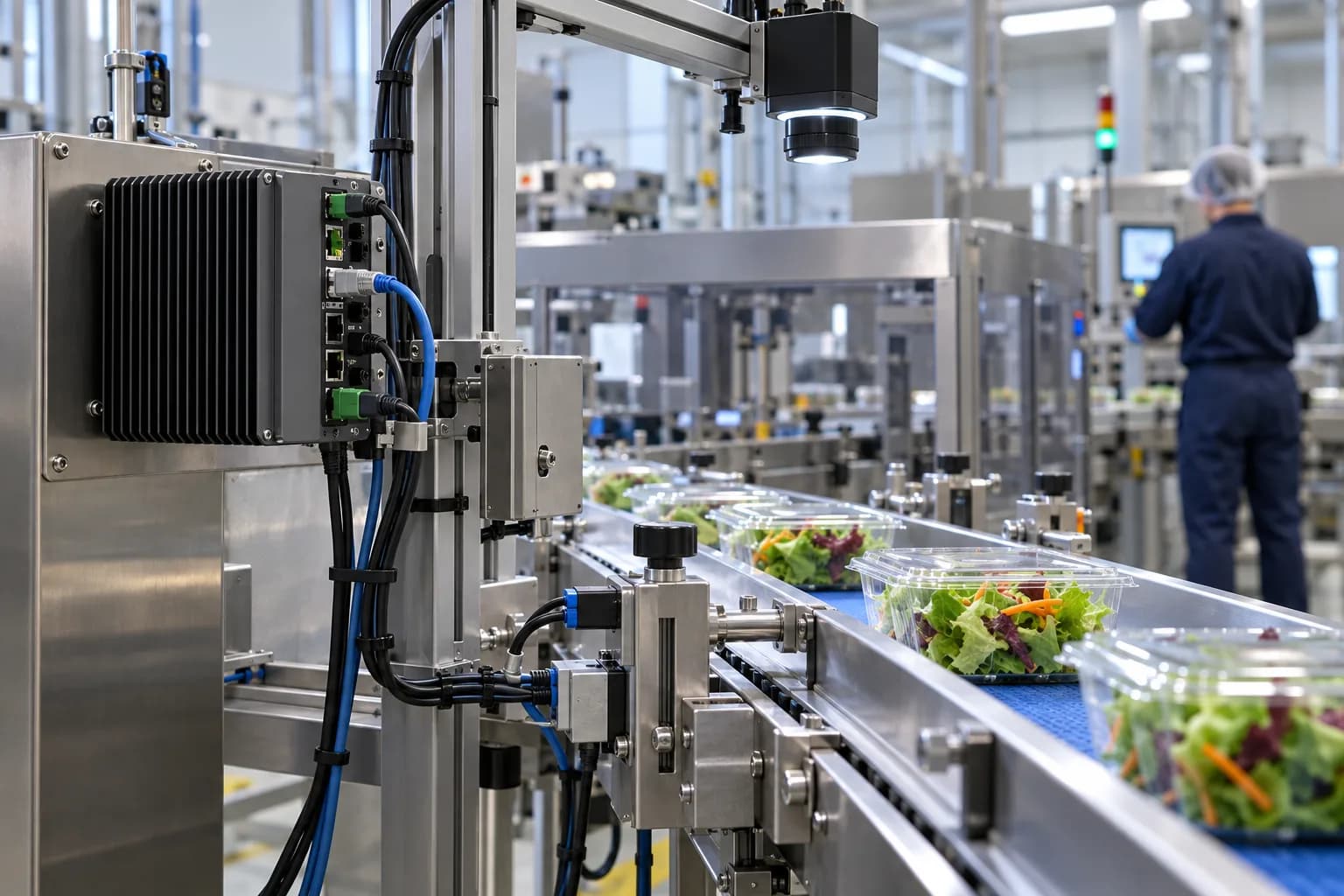
Industrial vision and acquisition
Connect cameras, sensors and production interfaces for edge acquisition, filtering and alerts, then integrate with MES or monitoring systems; validate protocols and latency on site.
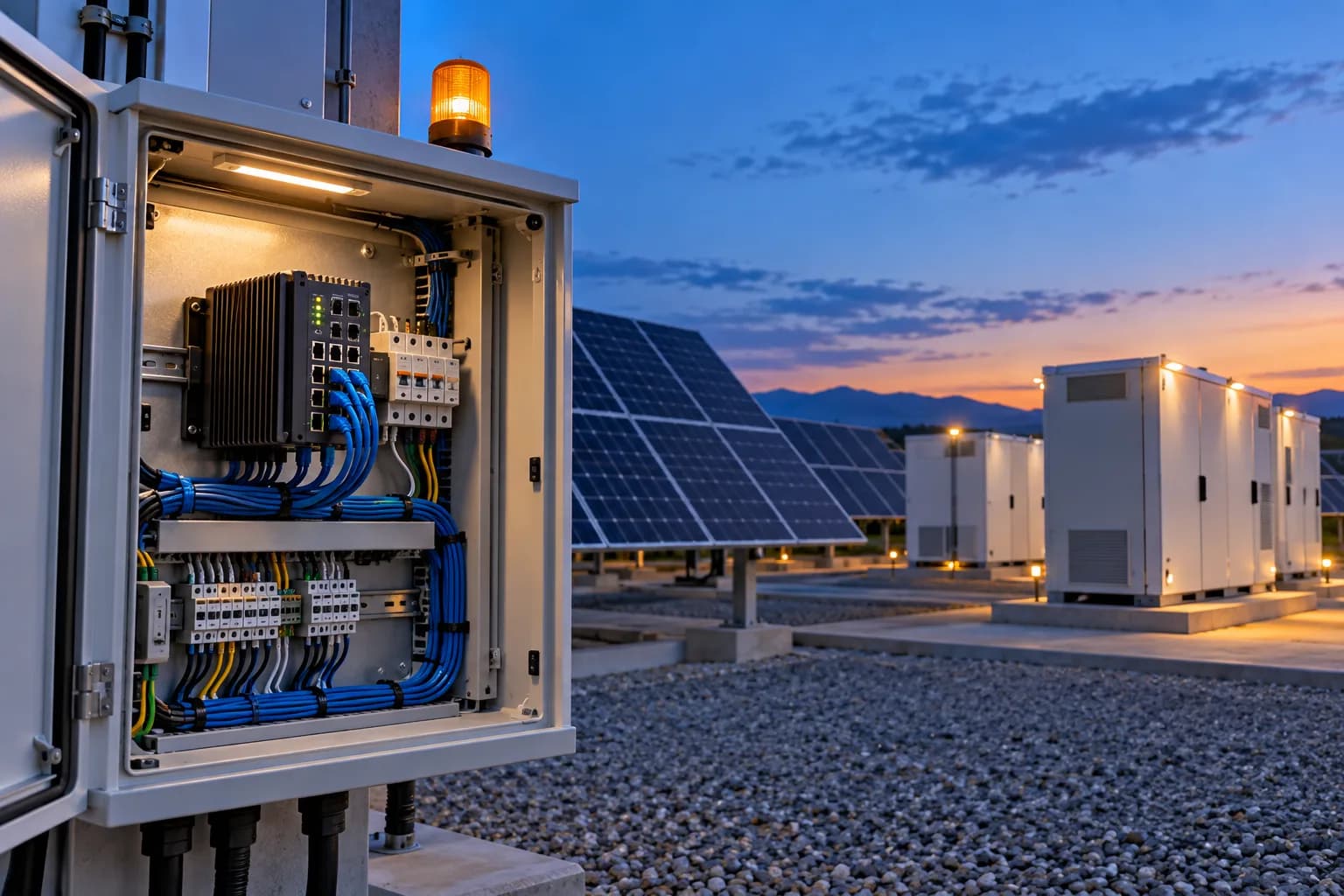
Energy gateways and DCP nodes
Integrate telemetry, authorized commands, logs and offline buffering for storage sites, campuses and DCP; electrical control and safety interlocks require a dedicated engineering review.
Engineering strength you can evaluate
System engineering goes beyond a new interface. Architecture, platform integration, application integration and release testing work together, with review records, reproducible builds and test reports. Staffing and maintenance scope are agreed before kickoff.
- Architecture and platform selection
- Review compute, interfaces, power, boot chain and supply constraints; deliver architecture, interface and risk records.
- Platform software and drivers
- Diagnose BSP, kernel, device-tree and peripheral issues, with patches, configuration changes and debugging records.
- Application and device integration
- Connect device interfaces, applications and customer systems; define permissions, offline behavior, recovery and human takeover.
- Testing, security and release
- Test stability, updates and recovery against an agreed matrix; deliver issue records, release manifests and maintenance guidance rather than visual claims.
From prototype to production handoff
Requirements and hardware review
Confirm BSP access, licenses, interfaces and acceptance targets; identify external dependencies.
Prototype and platform bring-up
Validate boot, display, networking and key peripherals before extending functionality.
Integration and acceptance testing
Integrate systems and devices; test network loss, power failure, permissions, performance and update recovery.
Handoff and lifecycle maintenance
Deliver images, build and test documentation; agree on patches, upgrades, training and support in the contract.
More than an installation image
- System images, flashing and recovery instructions, and release manifests.
- Source patches, build scripts, configurations, interface and deployment documentation within the contracted scope.
- Peripheral, stability, performance, security and update-recovery test reports, with thresholds established on the target prototype.
- Open-source license and third-party component inventory; proprietary driver and commercial software rights are checked separately.
Technical references and scope
Feasibility depends on vendor documentation, BSP availability and driver rights. Real-time behavior, boot time, power, AI performance and security require target-hardware testing. Universal support, zero vulnerabilities and untested performance are not promised. Licenses are reviewed per project.
Discuss my system project
Share the chipset and board, available BSP or OS version, peripherals, use case, volume, target market and maintenance period. We assess documentation and licensing before agreeing on feasibility, milestones, budget and acceptance criteria.
Discuss my system project