
AI software development
Connect models to real work: knowledge search, business assistants, multimodal apps and auditable automation.
Loading page…

An office workflow concept for document retrieval, drafting and human approval. AI-generated scene concept, not a photograph or a delivered customer case.
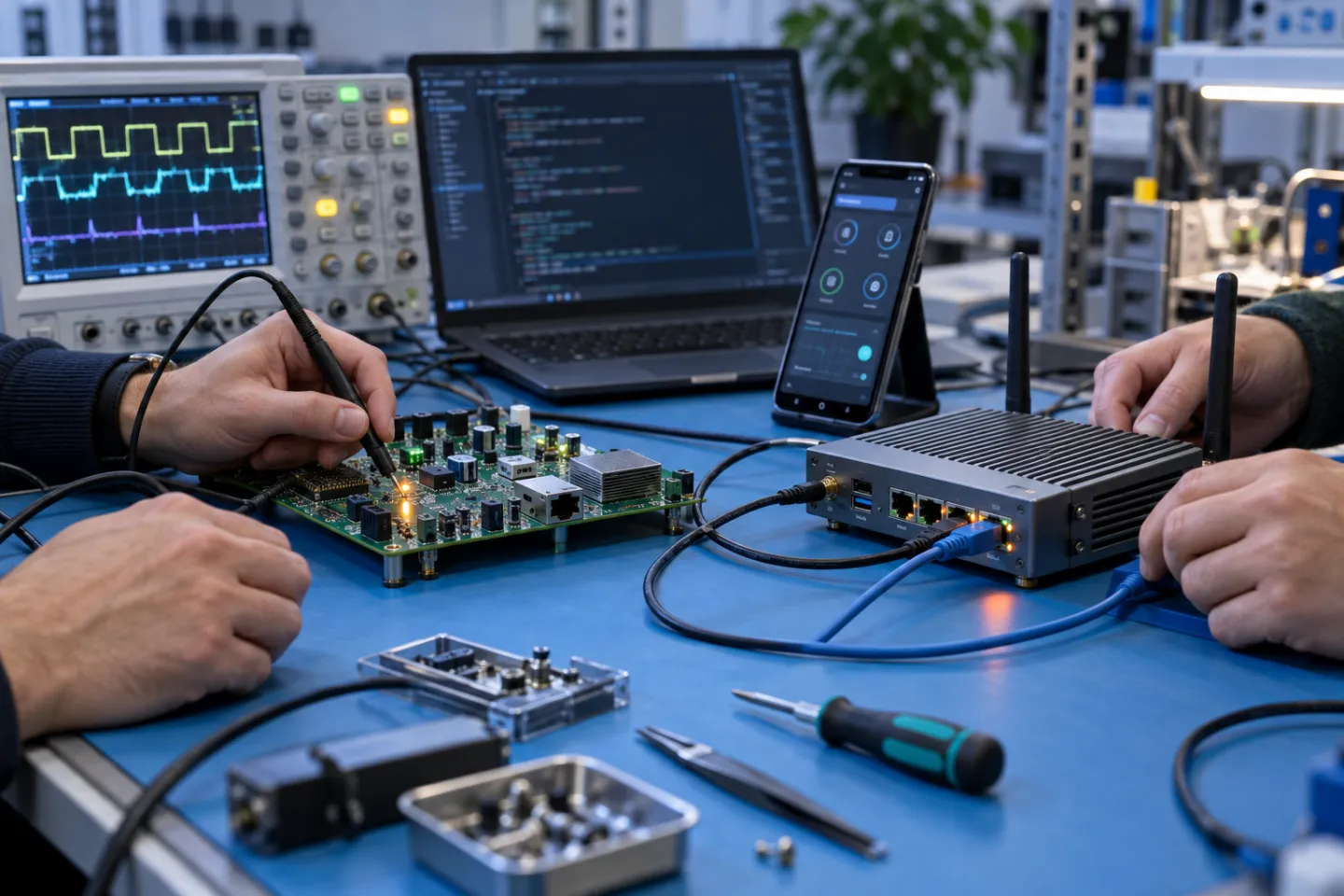
A development concept for routers, embedded devices and firmware debugging. AI-generated scene concept, not a photograph or a delivered customer case.
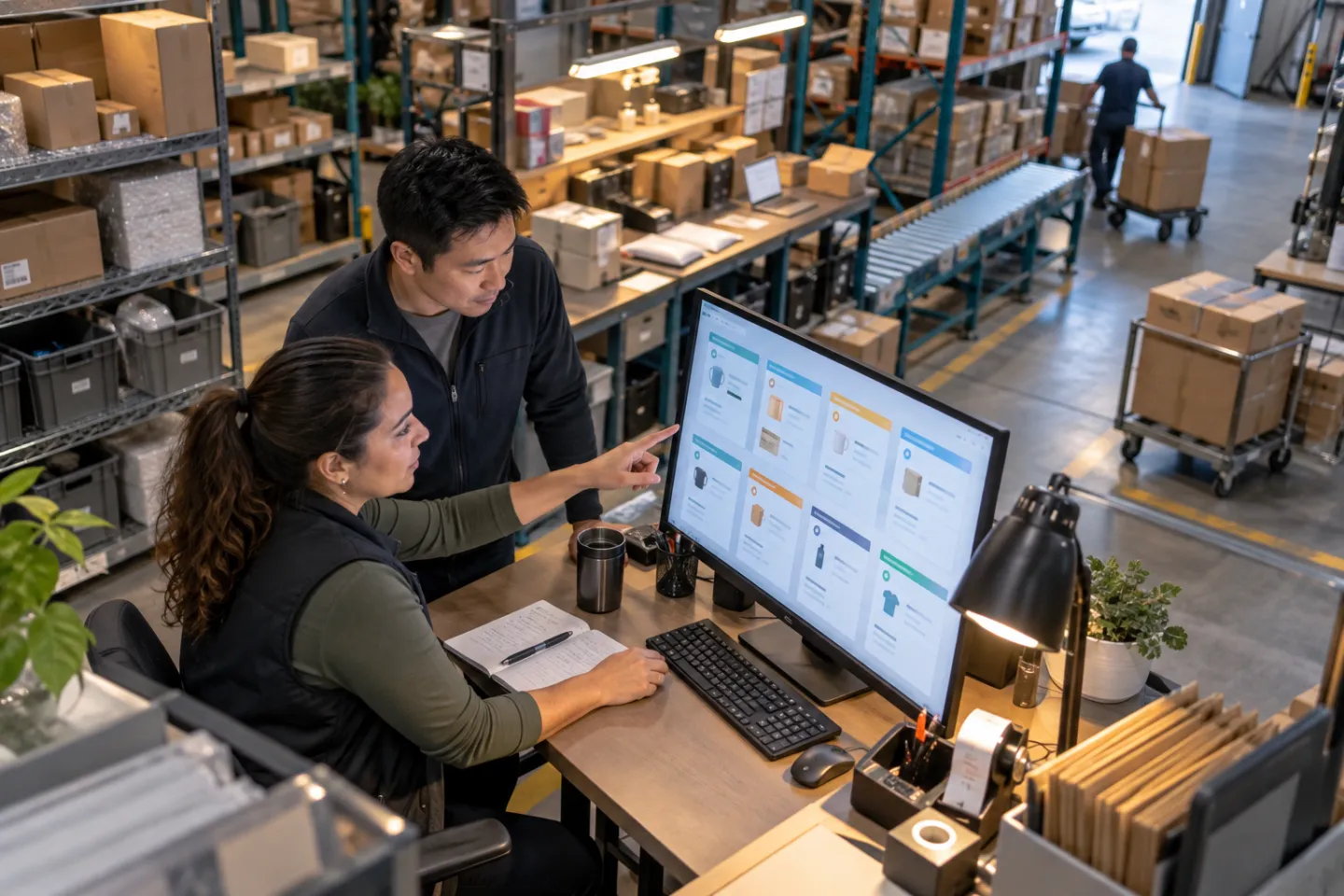
Explore workflows connecting product content, order organization and human review. AI-generated scene concept, not a photograph or a delivered customer case.
Start with a business problem. Bring software, agents, devices and models together in a deliverable solution.
Turn business workflows into useful software and brands into clear customer journeys.
Connect models to real work: knowledge search, business assistants, multimodal apps and auditable automation.

Mobile-first brand websites, service portals, international storefronts and business dashboards.
Connect devices, sites and dispatch platforms, from research validation to engineering delivery.
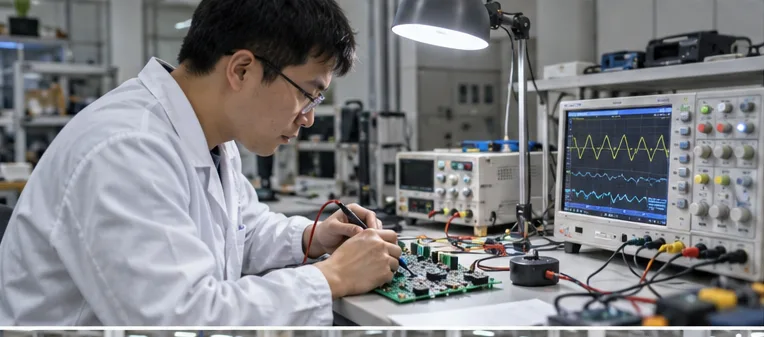
From feasibility to engineering prototypes, advance software and hardware through experiments and stage gates.
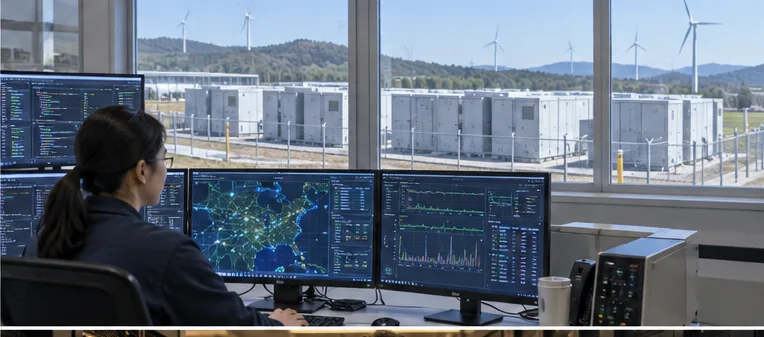
Connect energy resources, edge controllers and dispatch platforms through aggregation, gateways and custom equipment.
Build measurable, controlled models and automation around authorized data and real business needs.
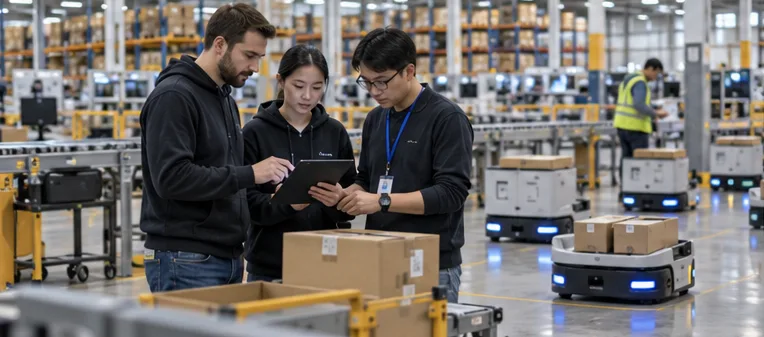
Connect product research, content, support, orders and analytics; automate routine tasks with human control of critical decisions.
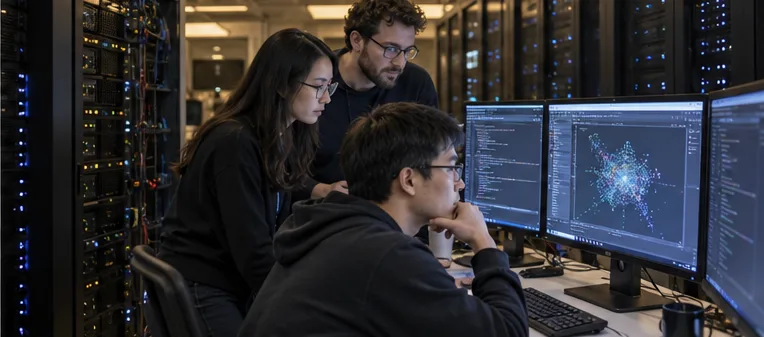
Work within authorized data, model goals and compute budgets: pretraining assessment, SFT, preference optimization, RL and private deployment.
Original AI-generated concept scene; not a real customer, device or project result.
Custom software, device interfaces and robotics for restaurants, chains, hotels and apartment buildings. Connect ordering, checkout, kitchens, operations and cross-floor meal and parcel delivery around site requirements.
Discuss restaurant and building robotics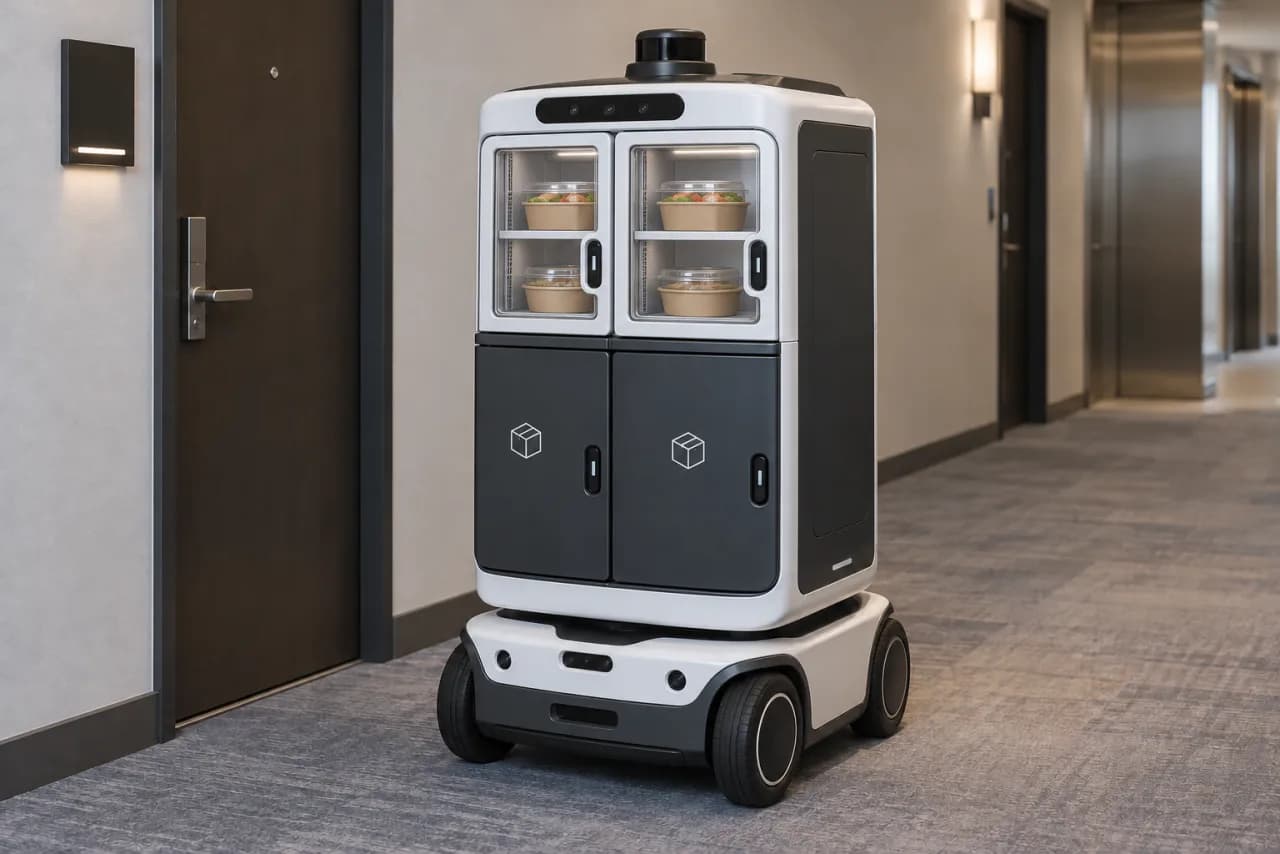
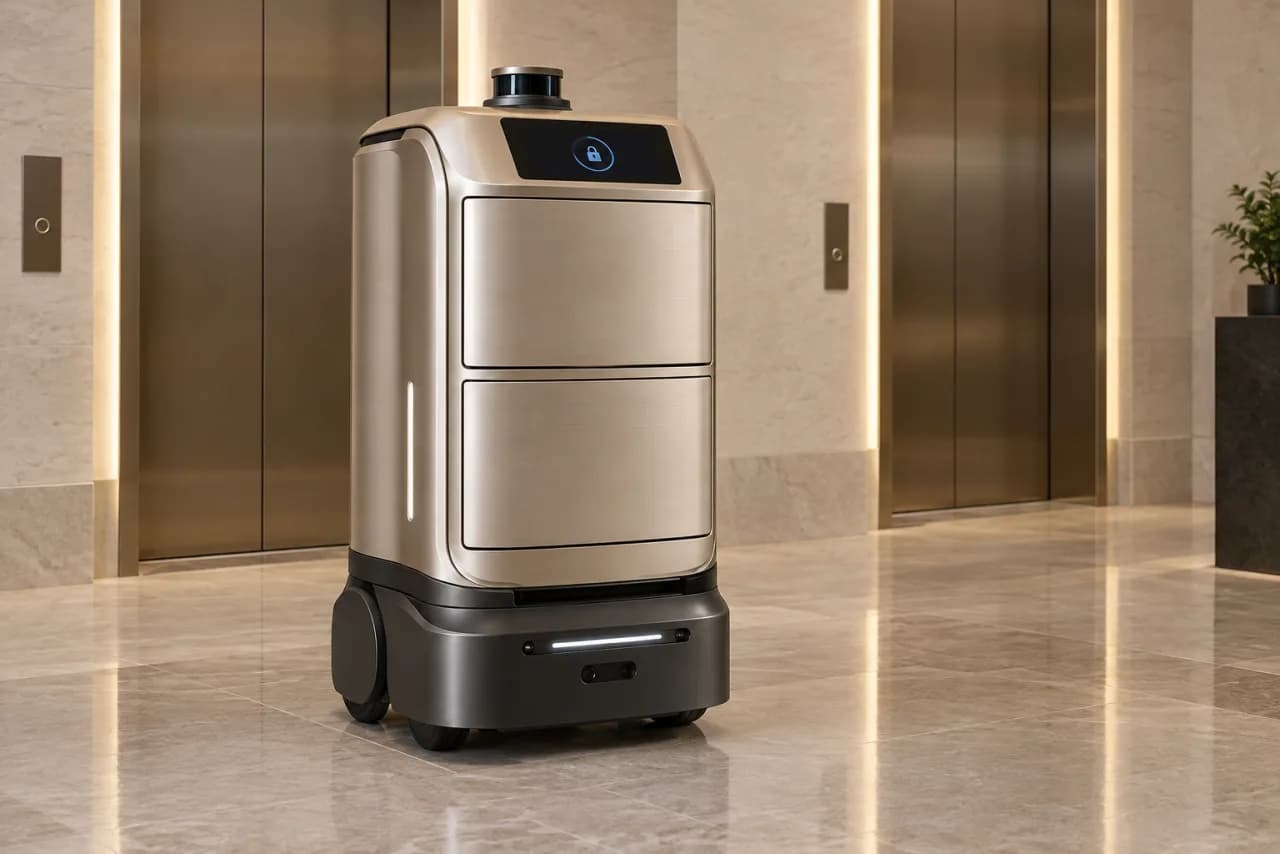
Test cross-floor routes, wrong-room blocking, private notifications, door permissions, emergency stops, offline and uncollected-item fallback; no public room numbers.
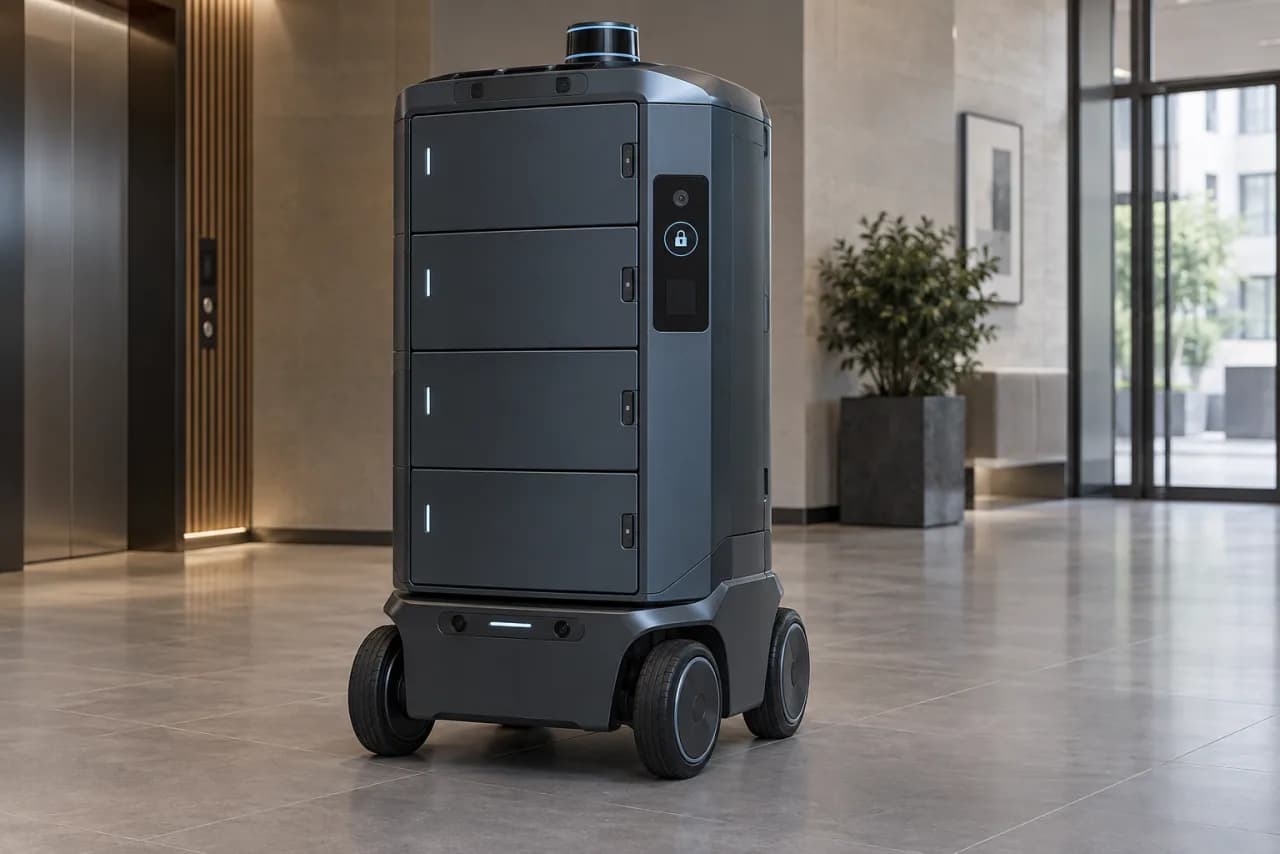
Test resident permissions, incorrect collection prevention, lift failures, blocked paths, return and takeover; confirm payload and meal/parcel separation on site.
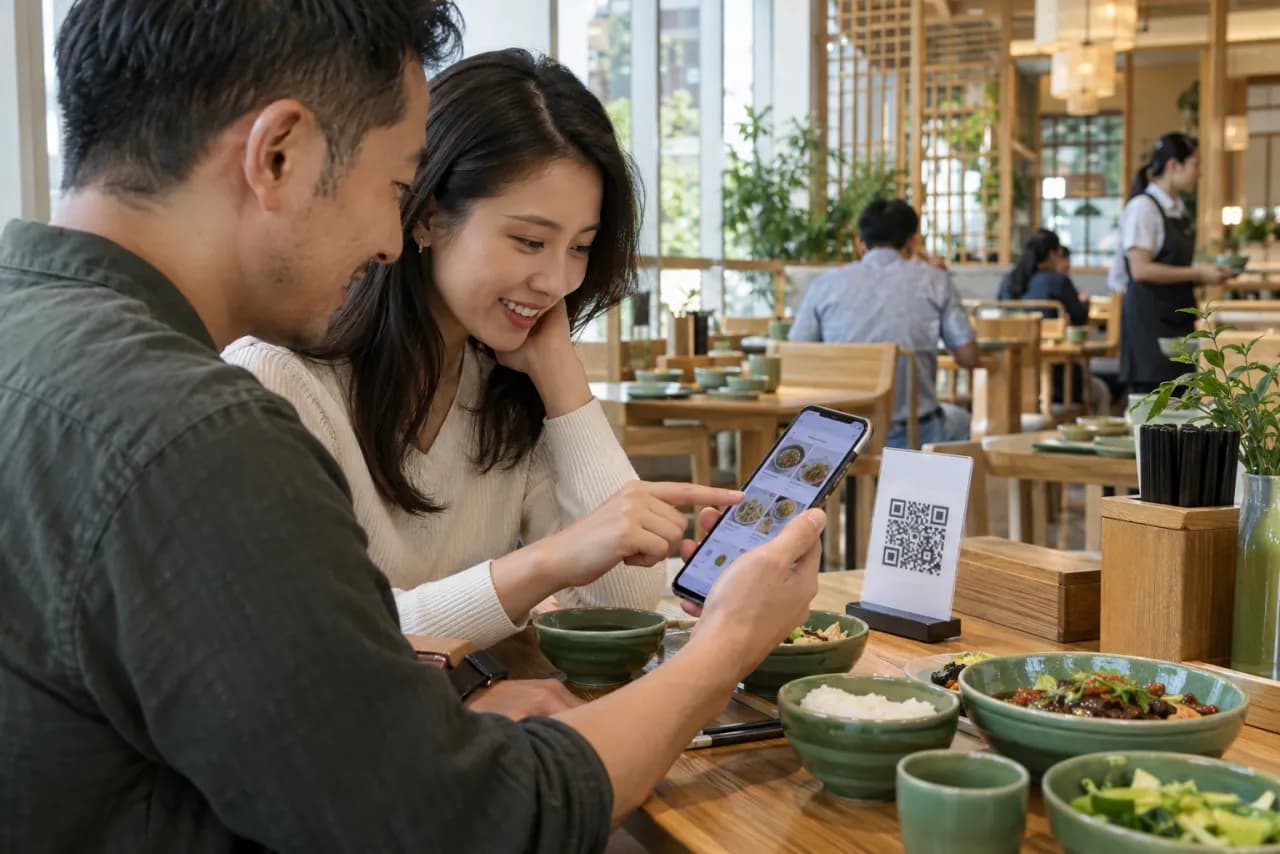
No duplicate orders; consistent price/stock and clear offline or failure feedback.
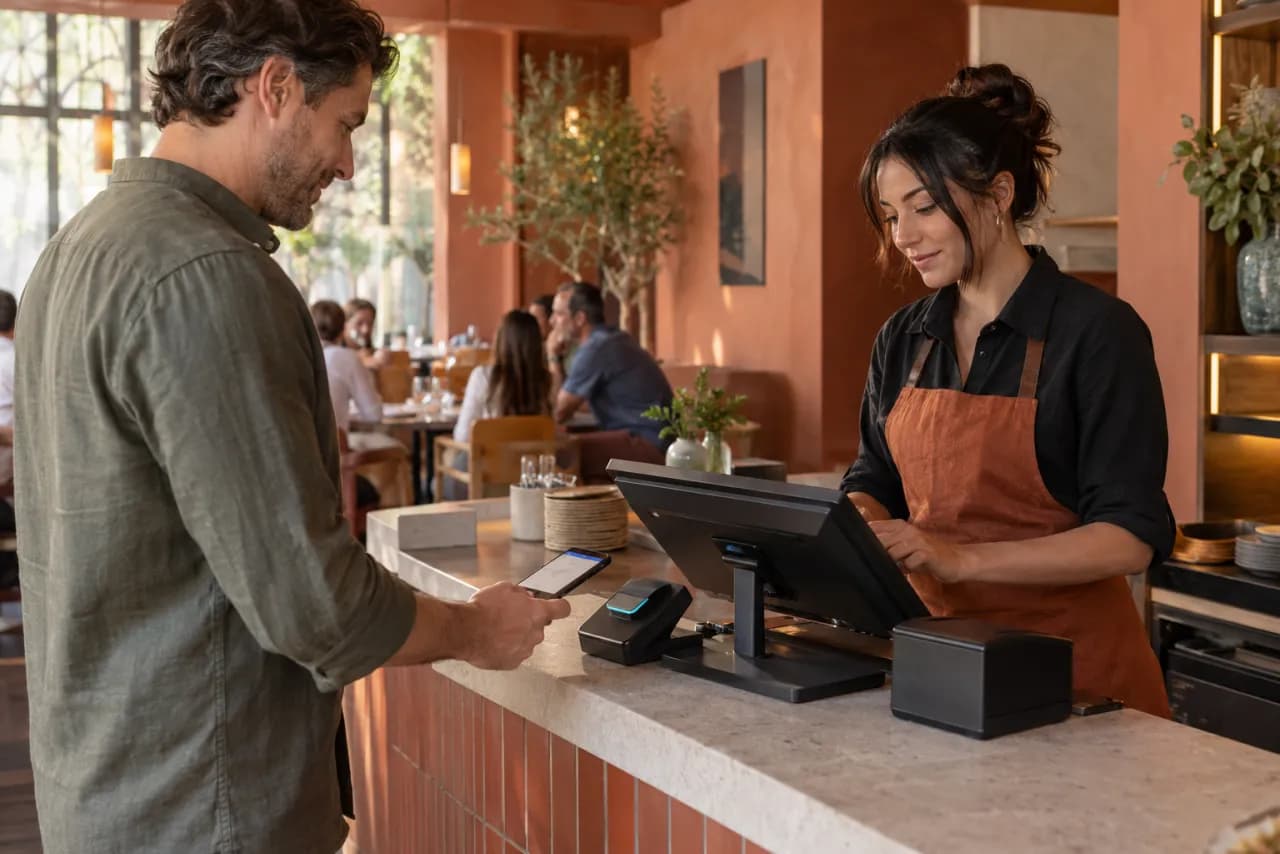
Validate duplicate callbacks, failed payments and refund/bill consistency with access controls.
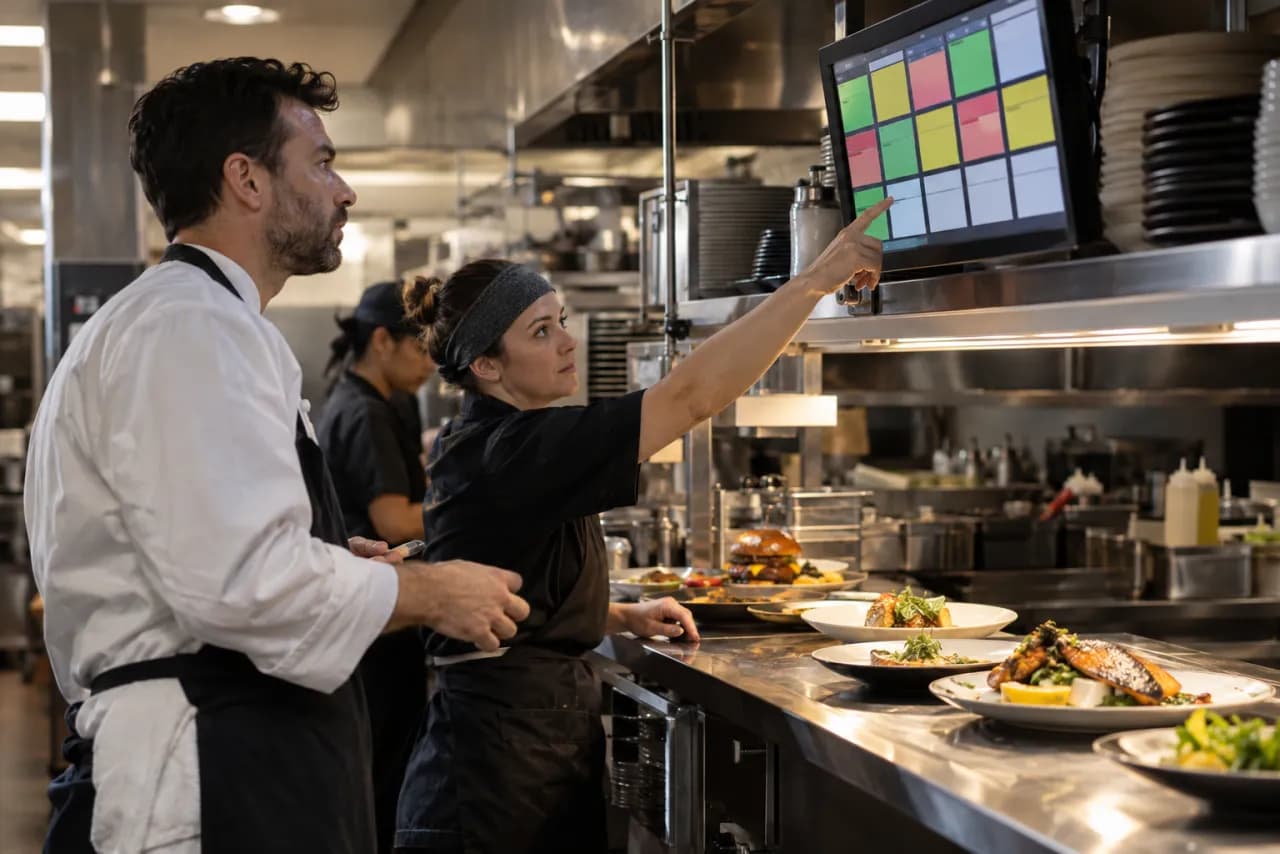
Test changes, cancellations, print retries and station sync with manual handling.
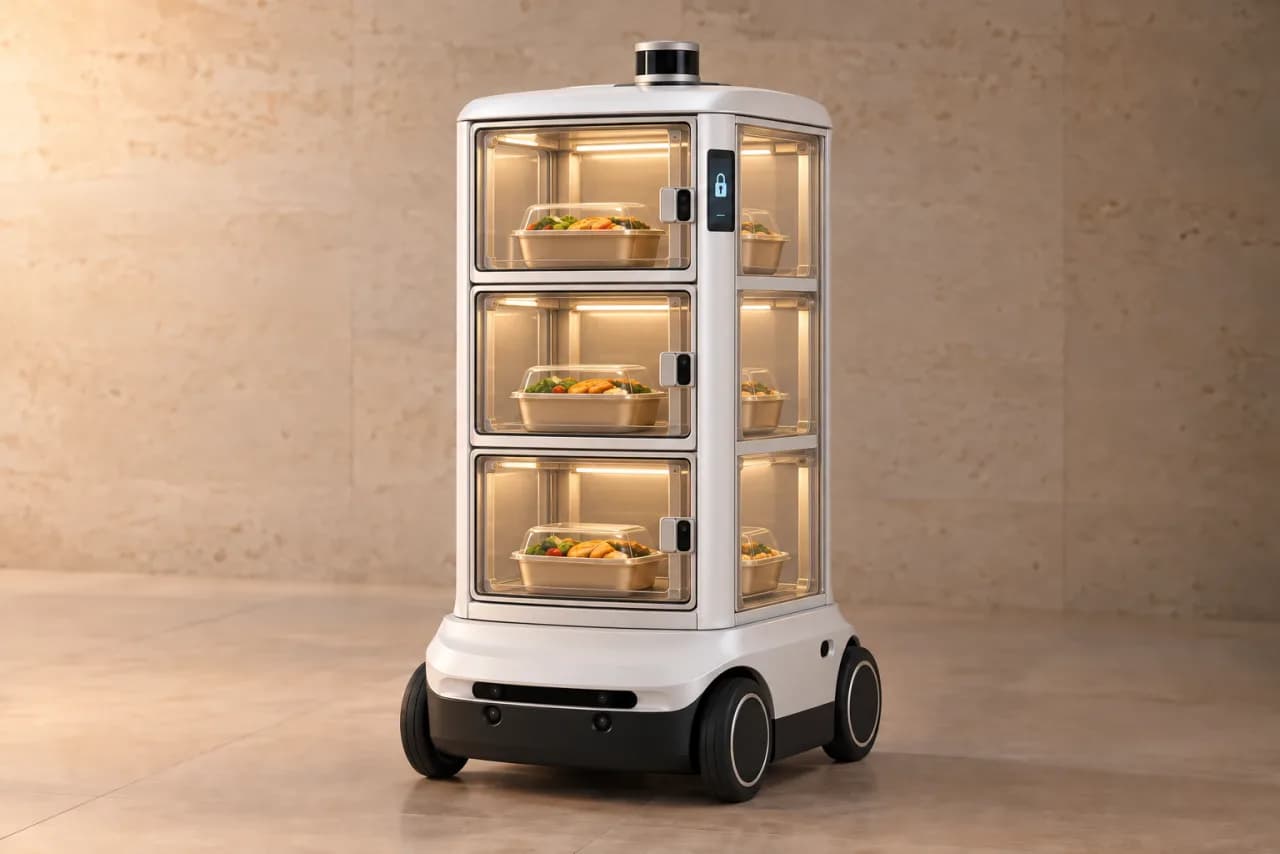
Site-test routes, payload, obstacles, emergency stops, offline behavior and takeover; keep device safety active.
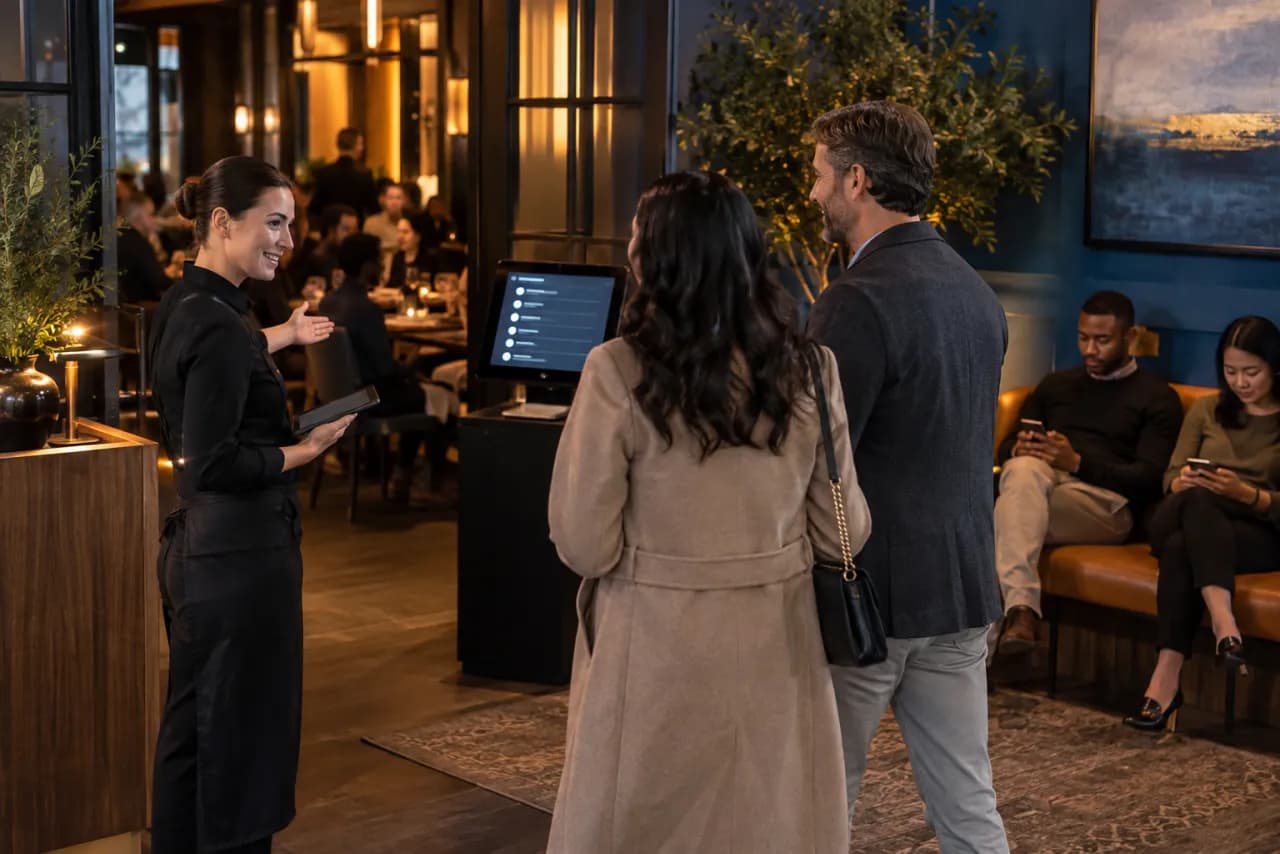
No lost queue calls or tickets; human confirmation for allergens, charges and commitments.
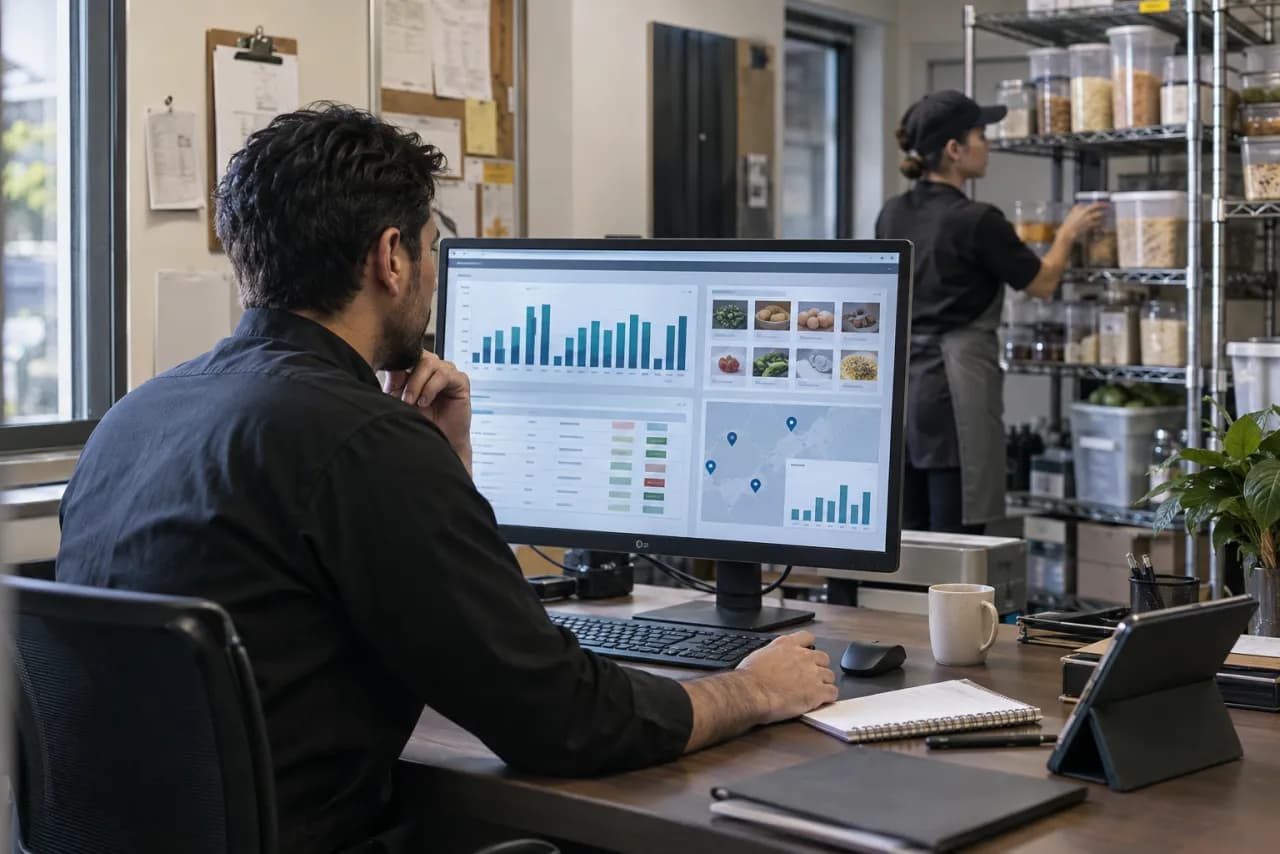
Check sources, permissions and missing-data alerts; managers review predictions and advice.
Food compartments can use sealed transparent windows and insulated construction; parcel compartments remain opaque and independently locked. Collection verification, abnormal-door alerts and handover logs help reduce unauthorized access and theft risks.
Large transparent insulated front and side panels enclose three independently locked meal levels. Retain load-bearing frames, seals and an opaque enclosed base; customize temperature monitoring, collection verification and door-event logs.
Two enclosed compartments with independent access for room meals and items; integrate PMS, arrival notices, authorized lifts and collection checks.
Four opaque parcel lockers conceal packaging and labels, with resident verification, lock monitoring and handover logs; meals require a separate optional insulated module.
Upper transparent enclosed insulated food compartments and lower opaque parcel lockers, separately loaded and authorized for hotel/apartment meal and parcel tasks.
Original AI-generated appearance concepts, not current models or validated prototypes. Enclosure, insulation and security are design goals requiring material, temperature, cleaning, lock and tamper testing; no absolute protection against poisoning or theft.
Retain three enclosed meal levels, transparent front and sides, structural frames and a closed base; only frame, roof and base finishes change. These are custom appearance and setting concepts, not six available models. Validate materials, cleaning durability, insulation and building interfaces per project.
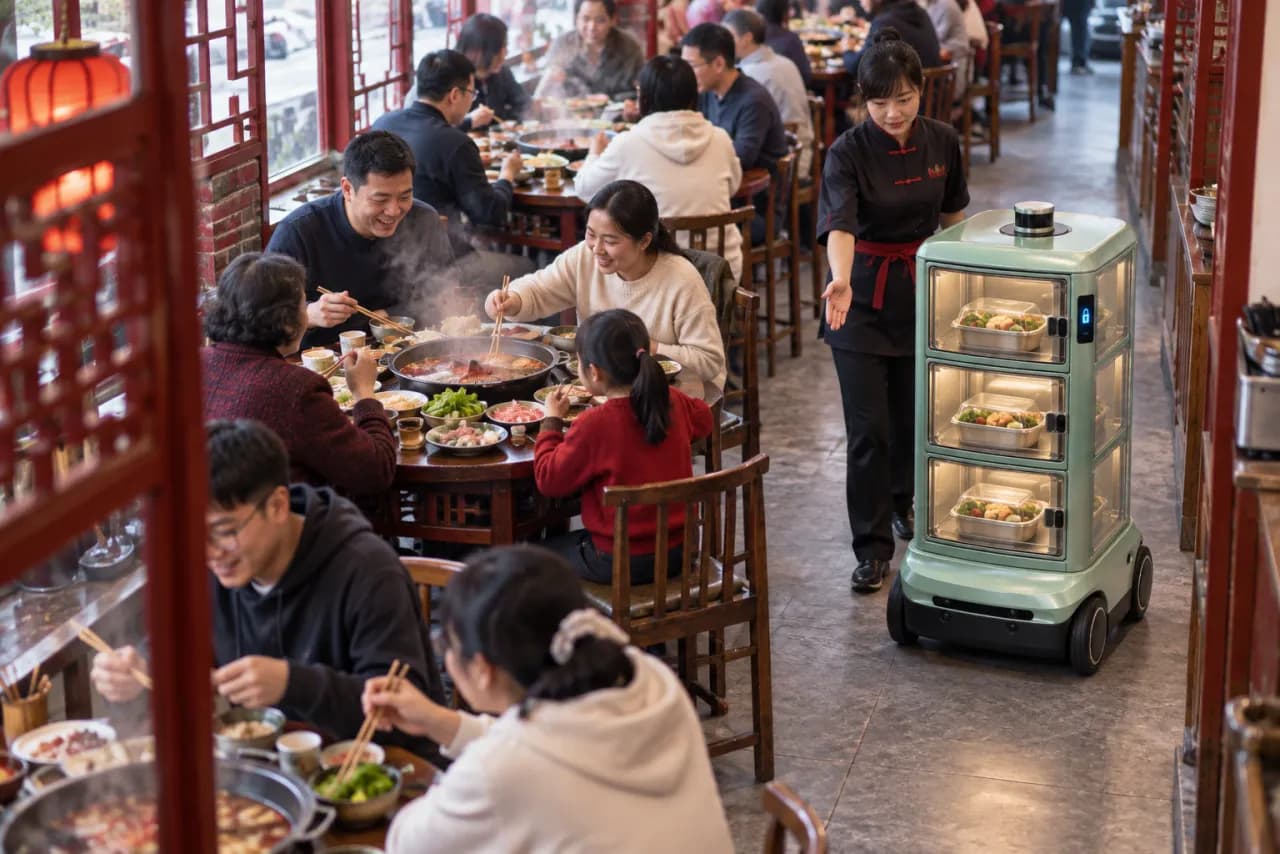
Staff-guided meal transport can connect kitchen readiness to table tasks, reducing repetitive trips; validate narrow aisles and pedestrian clearance on site.
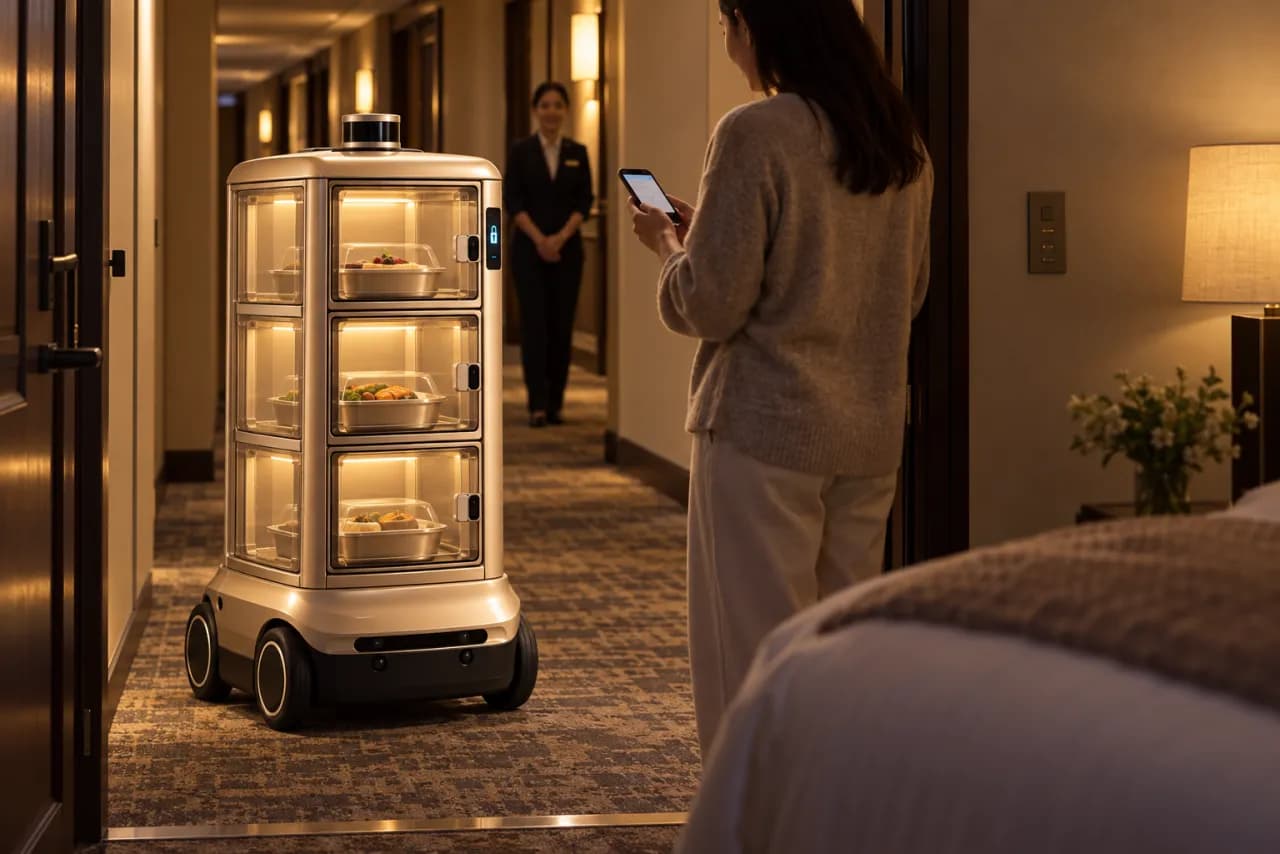
Room-door collection can combine room tasks, arrival notices and access checks to reduce reception coordination; confirm room permissions, lifts and timeout handover.
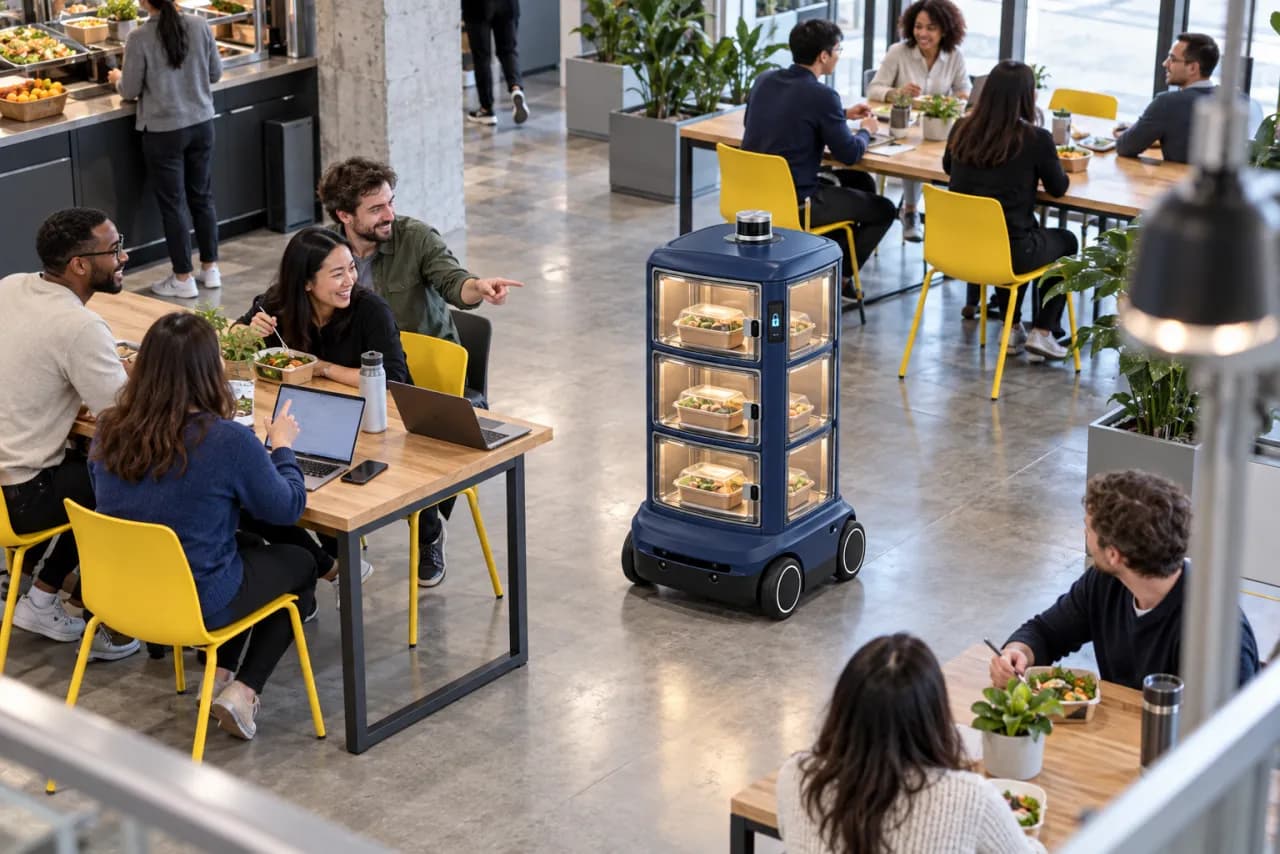
Lunch-hour meal circulation can link preorders and delivery zones to reduce waiting and manual carrying; design routes, peak demand and pause controls for the site.
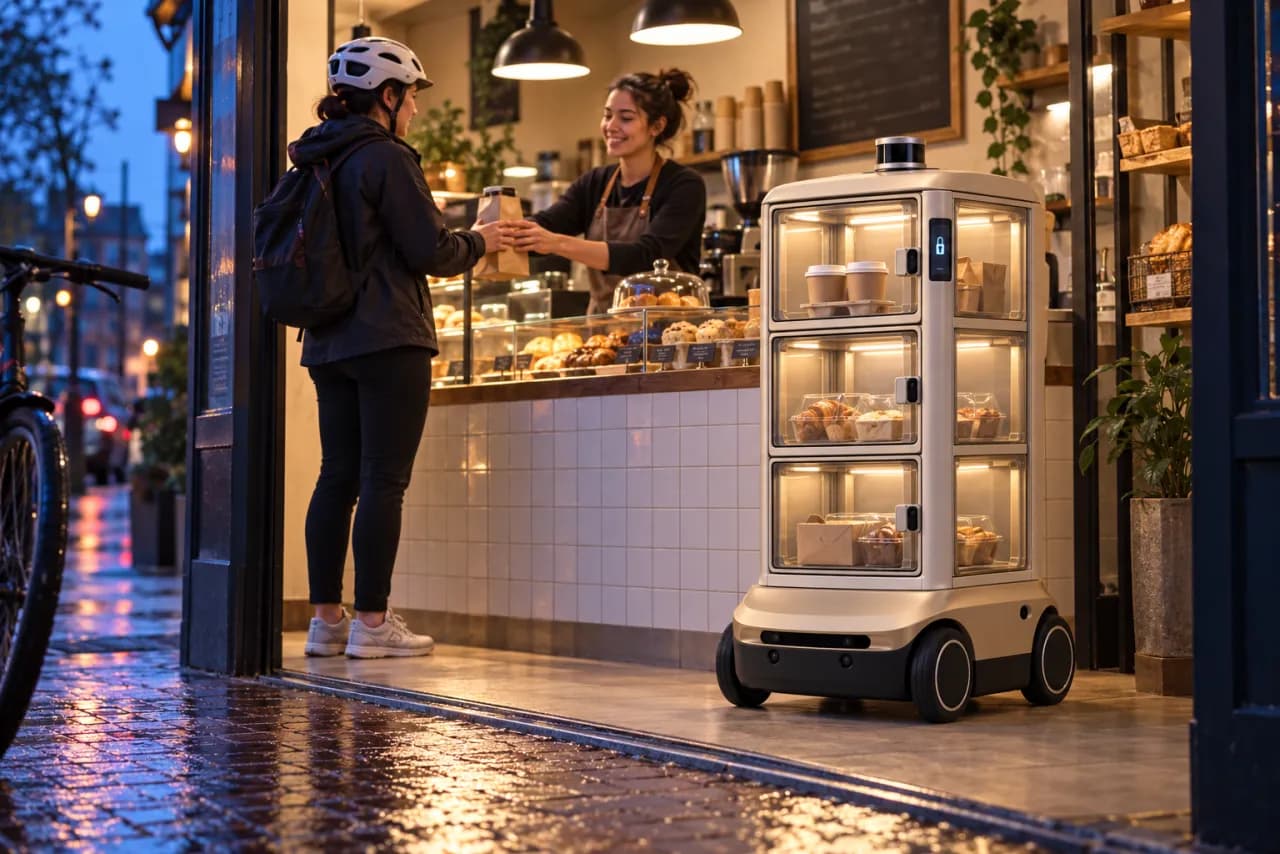
A café pickup point can connect order readiness, staff handover and collection checks, clarifying counter workflows; this is indoor delivery, not unattended public-road transport.
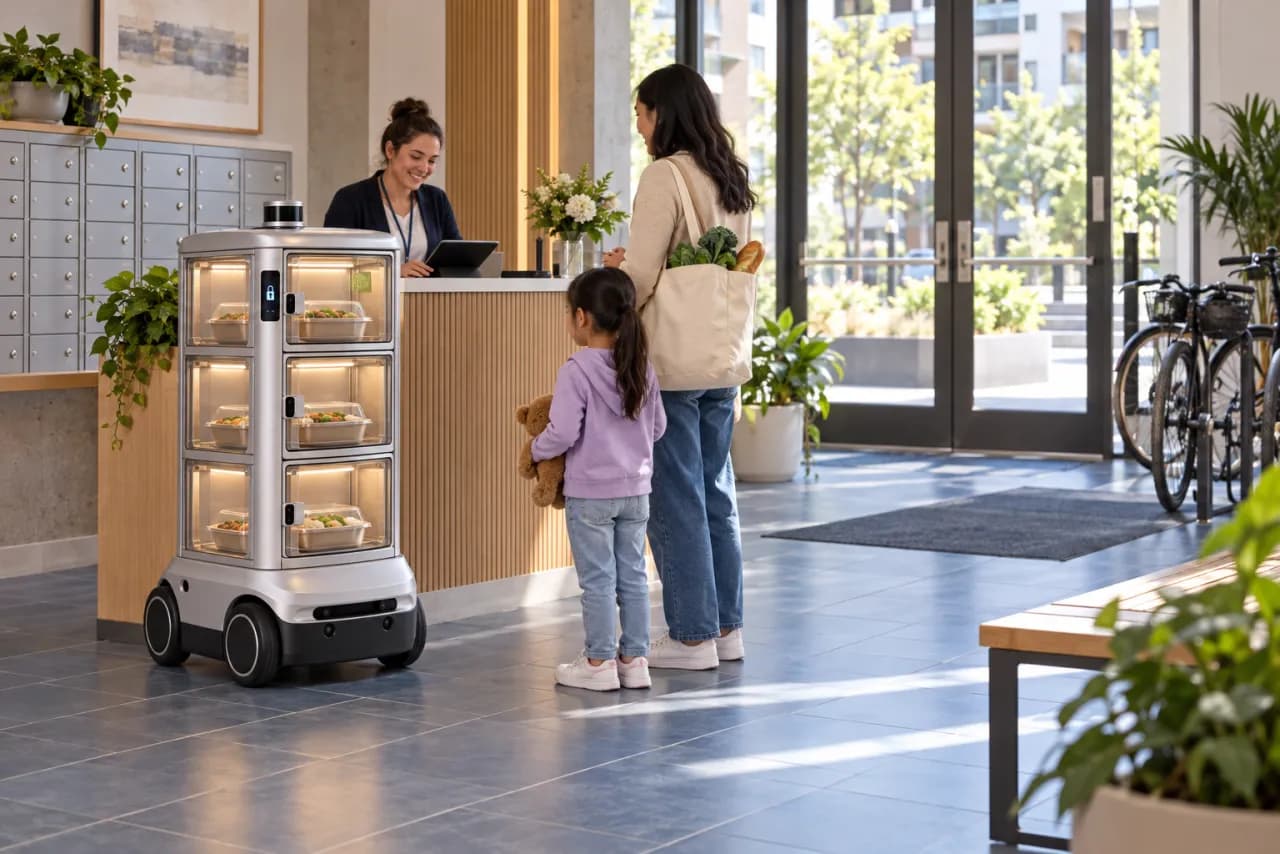
Apartment reception can coordinate resident meals and collection records, reducing manual coordination; food collection only, with opaque independent lockers required for private parcels.
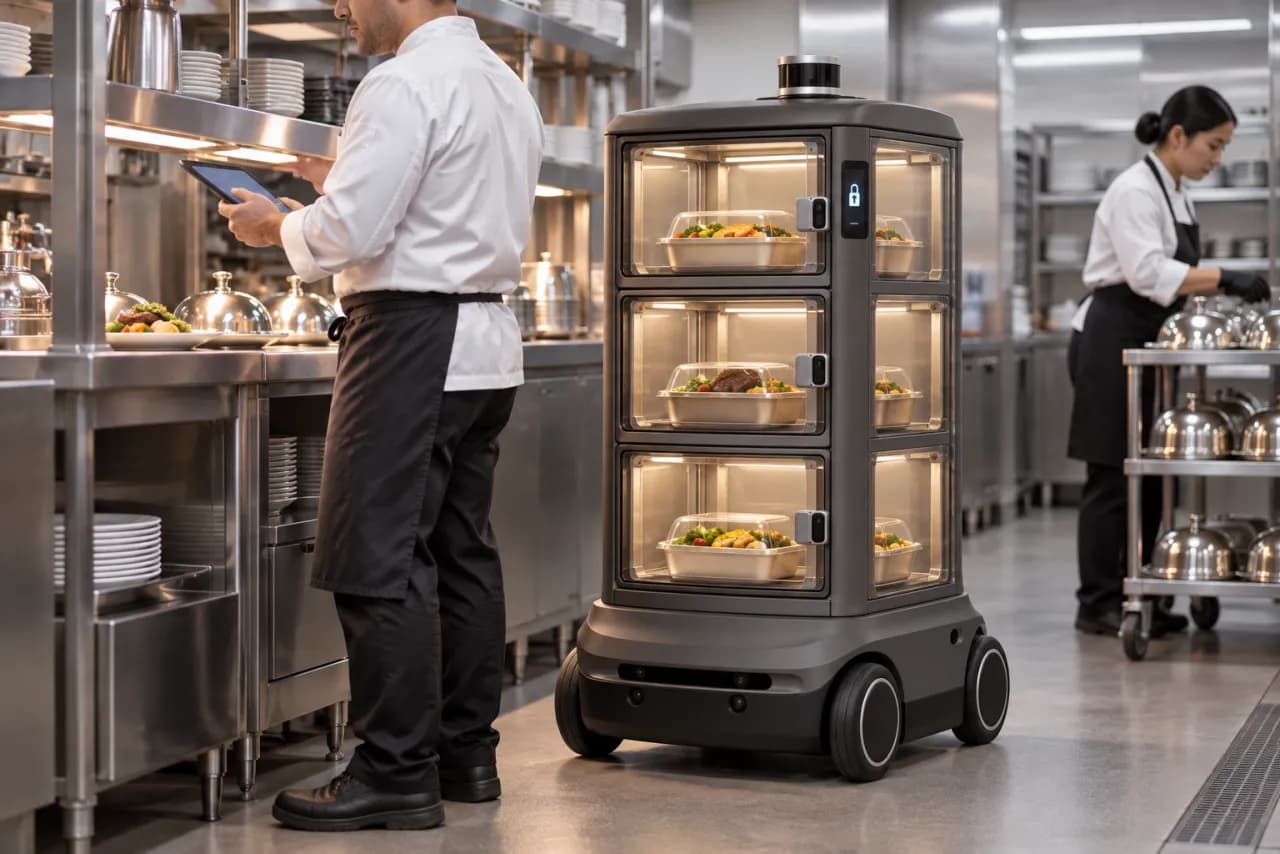
Staff-confirmed loading at the kitchen pass can link banquet dispatch to kitchen queues and progress for batch service; test payload, cleaning and temperature retention.
Ordering systems can integrate with delivery robots. Logistics can connect hotel management, apartment property systems and robots. We develop interfaces and validate software, devices and existing platforms together using shared task states.
Share order, kitchen and delivery states to reduce duplicate entry and let staff track the complete journey.
Connect logistics, hotel PMS or property platforms with robot tasks and proof of collection, tracking reception-to-room or resident delivery.
Confirm interface access, vendor authorization, versions, data permissions and device safety first. Use shared order/task IDs; test signed callbacks, duplicates, cancellations, retries, timeouts and human takeover. Devices receive only task-essential data.
Existing ordering and meal-delivery robot products have been sold in the markets below. Custom software, device interfaces and deployment integration serve restaurants, hotels and apartments, with features and delivery scope agreed per project.
Confirm model availability, service arrangements, local interfaces and delivery conditions separately. Sales markets do not imply local certification of every model or feature.
Requirements and interfaces → workflow prototype → software/device integration → site pilot → acceptance, training and support
Integrate existing robots or assist selection after checking authorized SDKs/APIs, payload, routes, obstacles, emergency stops, network recovery and human takeover. Use compliant payment services; no fixed revenue or fully unattended-operation guarantee.
Cross-floor delivery requires building and equipment authorization for lifts and access controls. Validate evacuation paths, wrong-floor/room blocking, recipient verification and timeout fallback. Separate meals and parcels, minimize recipient data and never bypass building safety controls.
From requirements and prototypes to integration and deployment, agree the scope, deliverables and acceptance criteria for each project.
Applications, business platforms, embedded firmware, hardware selection and integration. Scope may include enclosure and circuit design, interface adaptation, prototype integration and testing, as agreed in the project contract.
Discuss software and hardwarePrivate knowledge, multimodal interaction, tool use, multi-agent coordination and device-control workflows for personal and enterprise needs. Authorization, human approval, audit logs and recovery bound execution. Super-agent is a service name, not a claim of general superintelligence.
Discuss an AI agentModel selection, fine-tuning, RAG, evaluation and private deployment within authorized data and compute budgets. Develop research, backtesting, paper trading, market and execution interfaces, risk controls and monitoring. Live use requires separate permission, reliability and applicable-requirement checks. No return promises; backtests do not predict future results.
Discuss models and trading systems