Intentional activation
Start with a button or agreed wake action so children and guardians know when listening begins.
Loading page…
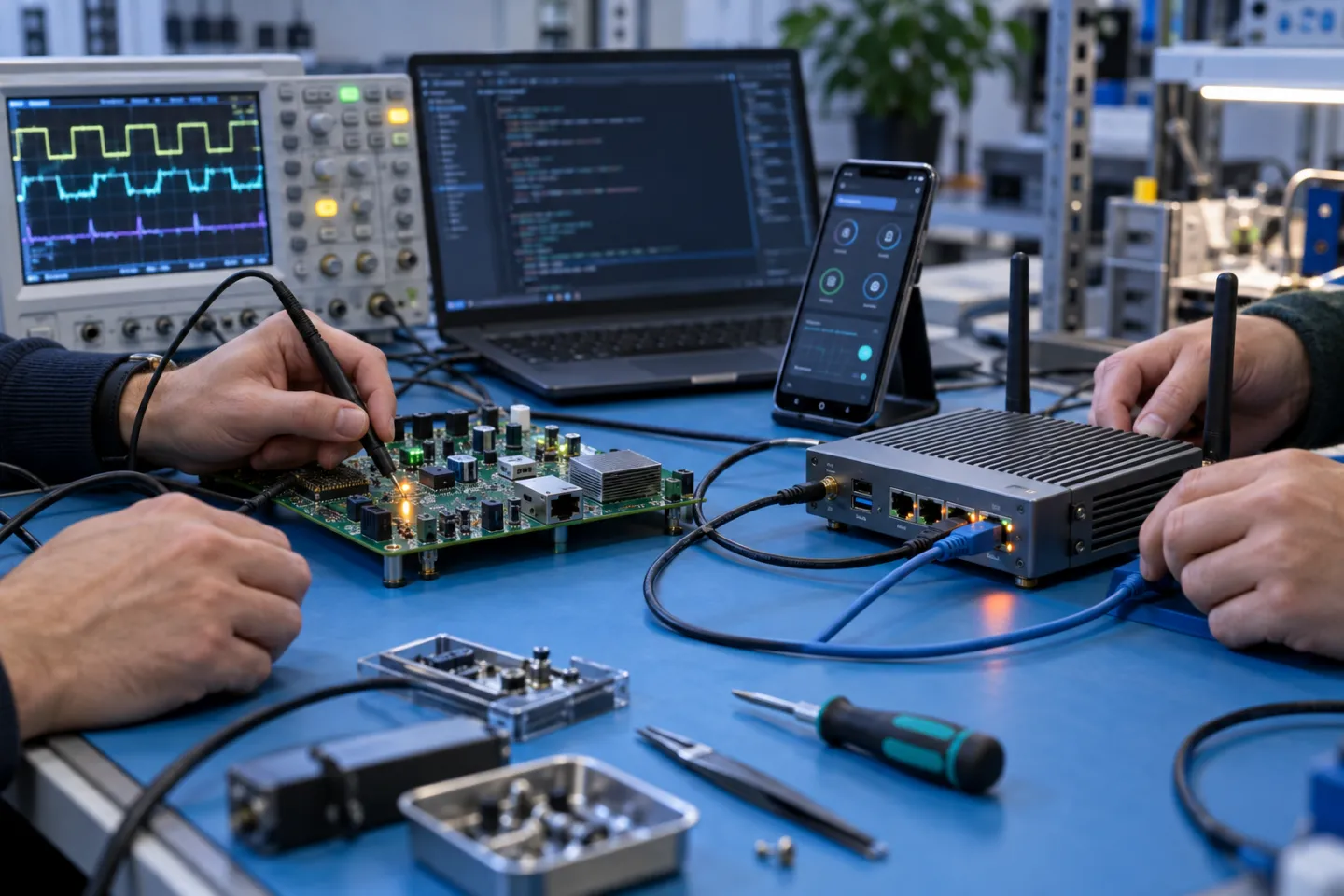
A development concept for routers, embedded devices and firmware debugging. AI-generated scene concept, not a photograph or a delivered customer case.

Explore household information and everyday assistance; permissions and features require separate agreement. AI-generated scene concept, not a photograph or a delivered customer case.
Development directions for AI plush toys, interactive story devices and children's gifts. These are scoping and acceptance criteria, not features guaranteed in every model.
Design and prototype validation · Delivery in agreed phases

Start with a button or agreed wake action so children and guardians know when listening begins.
Handle requests within the character, age-appropriate content and allowed features. State uncertainty clearly.
Use voice, lights or optional motion. Validate response time, volume and interruption.
Support pause and exit. Guardians manage settings, record scope and deletion requests.
Microphones, speakers, buttons and state indicators. Materials, construction and batteries require separate validation.
Character settings, story flows, topic libraries and boundaries reviewed for the target age and market.
Connect speech recognition, model calls and response generation. Define connectivity, failure messages and offline scope.
Settings, consent and deletion flows, updates, fault records and support responsibilities.
Test sensitive topics, out-of-scope requests and uncertain answers. Document handling and human feedback paths.
Validate speech, volume, battery life and pause controls under real noise, distance and network conditions.
Review collection, storage, retention and deletion. Do not retain children's conversations indefinitely by default.
Simulate outages, timeouts and failed updates. Define recovery and functionality after service ends.
Confirmed configuration: MediaTek MT8883 series, 16GB memory, 128GB nominal storage, stereo output, four microphone inputs, an HD camera and local Agent deployment. The product page has the full specifications, data flow and open items.
Design and prototype acceptance requirements, not certifications or promises about an available product.
Define age-appropriate themes, schedules and feature controls. Do not ask children for contact details.
Distinguish listening, responding and off states. Validate mute controls and permission prompts.
Minimize personal data. Specify retention, deletion and consent withdrawal in the product scope.
Not a substitute for parents, teachers or professional support. Validate materials, construction, batteries and age guidance for the target product and market.
Phased hardware and software development for toy brands, children's gift channels, content studios and IP partners.
Agree on target age, occasion, budget range and sales market.
Review form, sound, story flows and parent settings.
Assess content boundaries, data handling, hardware safety and production feasibility.
Agree on features, acceptance tests, supply chain and maintenance before scheduling delivery.
Define the people, devices and data boundaries. Together, we scope the first release, acceptance tests and delivery plan.