Say hello
Start with a clear wake action and simple listening or response signals.
Loading page…

Explore household information and everyday assistance; permissions and features require separate agreement. AI-generated scene concept, not a photograph or a delivered customer case.

A workbench explores local models, creative tasks and equipment selection. AI-generated scene concept, not a photograph or a delivered customer case.
Development directions for AI plush toys, interactive story devices and children's gifts. These are scoping and acceptance criteria, not features guaranteed in every model.
Design and prototype validation · Delivery in agreed phases
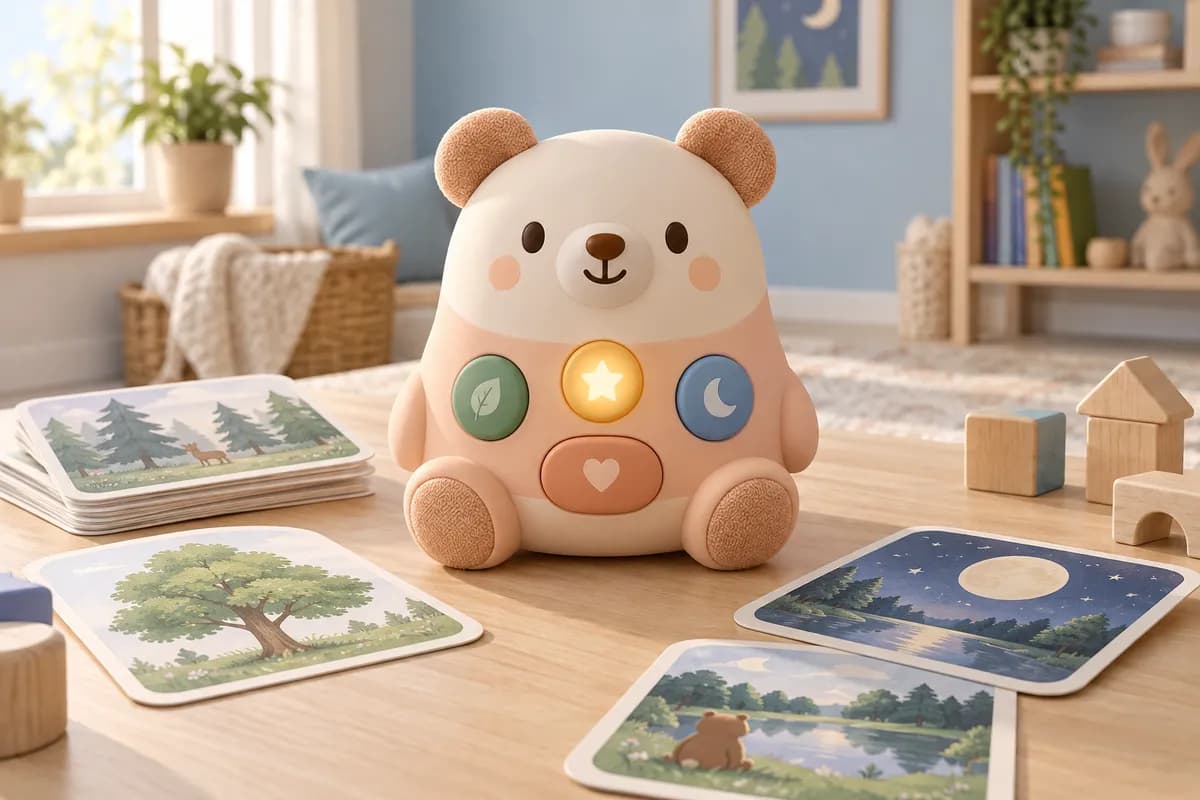
Start with a clear wake action and simple listening or response signals.
Choose characters and plot points within a defined experience, not unrestricted chat.
Explore selected everyday topics and interests, with uncertainty made clear.
Encourage expression through short conversations and role play, without promised learning outcomes.
Extend stories into drawing, retelling and offline activities, not longer usage targets.
Make stopping clear. Avoid language that creates dependency or claims exclusive understanding.
Confirmed configuration: MediaTek MT8883 series, 16GB memory, 128GB nominal storage, stereo output, four microphone inputs, an HD camera and local Agent deployment. The product page has the full specifications, data flow and open items.
Design and prototype acceptance requirements, not certifications or promises about an available product.
Define age-appropriate themes, schedules and feature controls. Do not ask children for contact details.
Distinguish listening, responding and off states. Validate mute controls and permission prompts.
Minimize personal data. Specify retention, deletion and consent withdrawal in the product scope.
Not a substitute for parents, teachers or professional support. Validate materials, construction, batteries and age guidance for the target product and market.
Phased hardware and software development for toy brands, children's gift channels, content studios and IP partners.
Agree on target age, occasion, budget range and sales market.
Review form, sound, story flows and parent settings.
Assess content boundaries, data handling, hardware safety and production feasibility.
Agree on features, acceptance tests, supply chain and maintenance before scheduling delivery.
Define the people, devices and data boundaries. Together, we scope the first release, acceptance tests and delivery plan.